Prep the mangoes: Peel and cut the mangoes, then blend until completely smooth.
You want about 3 cups of puree. If the puree has fibers, strain it for a silky texture.
Adjust sweetness: Taste your mango puree. If it’s very sweet, use the lower end of the sugar range.
If it’s tart, lean toward more sugar. Remember, chilling dulls sweetness slightly.
Bloom the gelatin: In a small bowl, sprinkle gelatin over 1/4 cup cold water. Let it sit 5–10 minutes until it looks spongy.
For agar, skip the bloom; you’ll simmer it in milk instead.
Warm the dairy: In a small saucepan, combine heavy cream, milk, sugar, vanilla, and a pinch of salt. Heat over medium-low, stirring until the sugar dissolves and the mixture is warm but not boiling.
Dissolve the setting agent: Remove the pan from heat. Stir in the bloomed gelatin until fully melted and smooth.
If using agar, whisk agar into the milk-cream mixture and bring to a gentle simmer for 1–2 minutes, whisking until dissolved.
Combine with mango: Let the dairy mixture cool for 3–4 minutes so it’s warm, not hot. Whisk it into the mango puree along with the lime juice. Taste and adjust sweetness or acidity if needed.
Strain (optional but recommended): For an extra-smooth dessert, strain the mixture through a fine mesh sieve into a large measuring cup or bowl with a spout.
Portion and chill: Pour into small glasses, ramekins, or a shallow dish for slicing later.
Tap the containers gently to pop air bubbles.
Set: Cover and chill for at least 3–4 hours, or until softly set. It should wobble slightly but hold shape. For a firmer set (slices), chill 6 hours or overnight.
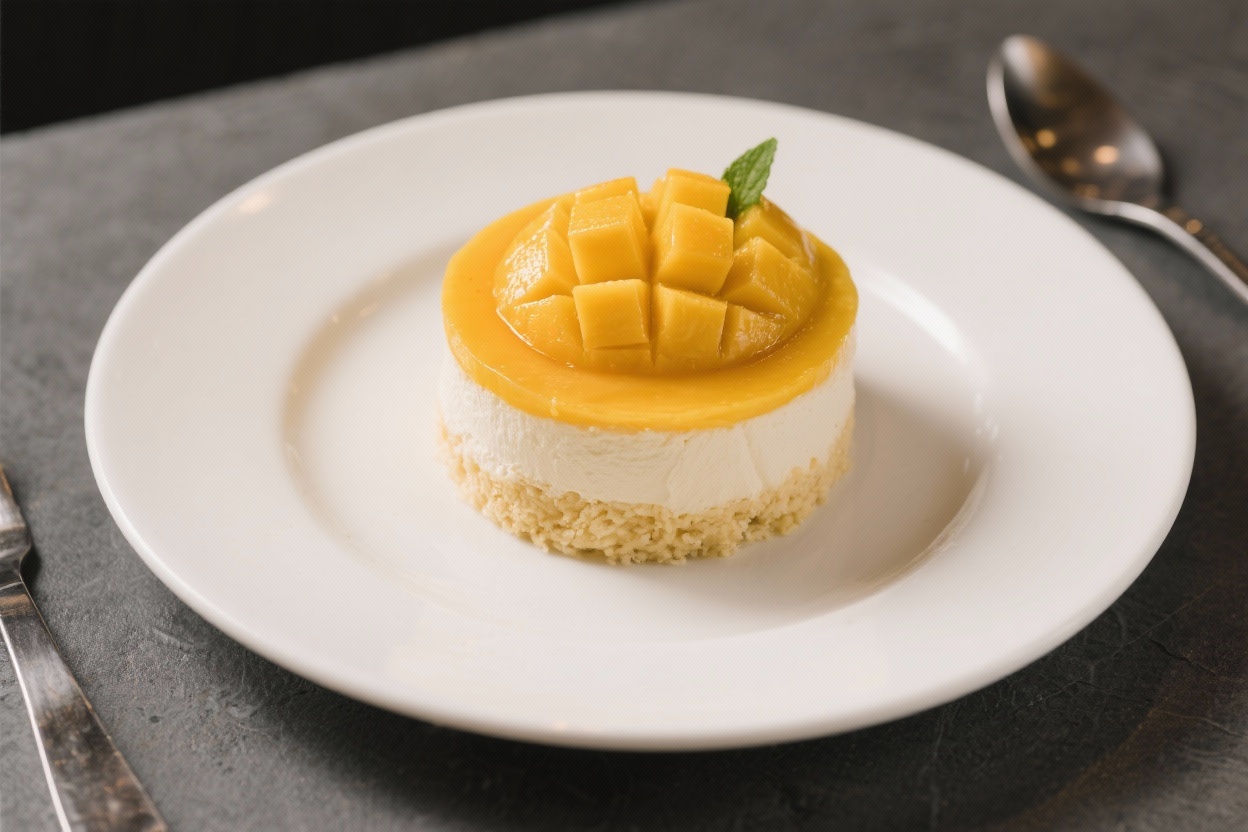
Garnish and serve: Top with toasted coconut, chopped pistachios, fresh mint, or extra mango cubes.
Serve cold.