Chocolate Sourdough Bread – A Cozy, Bakery-Style Loaf at Home

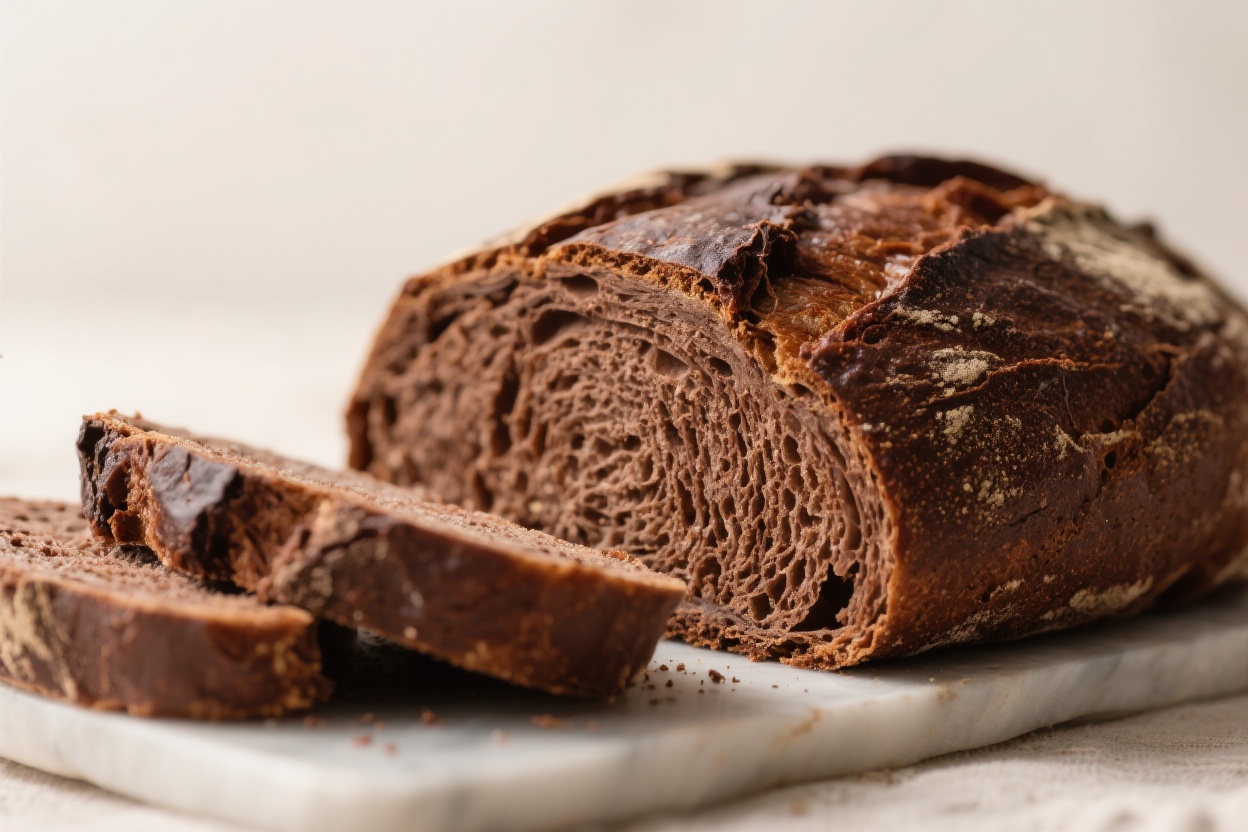
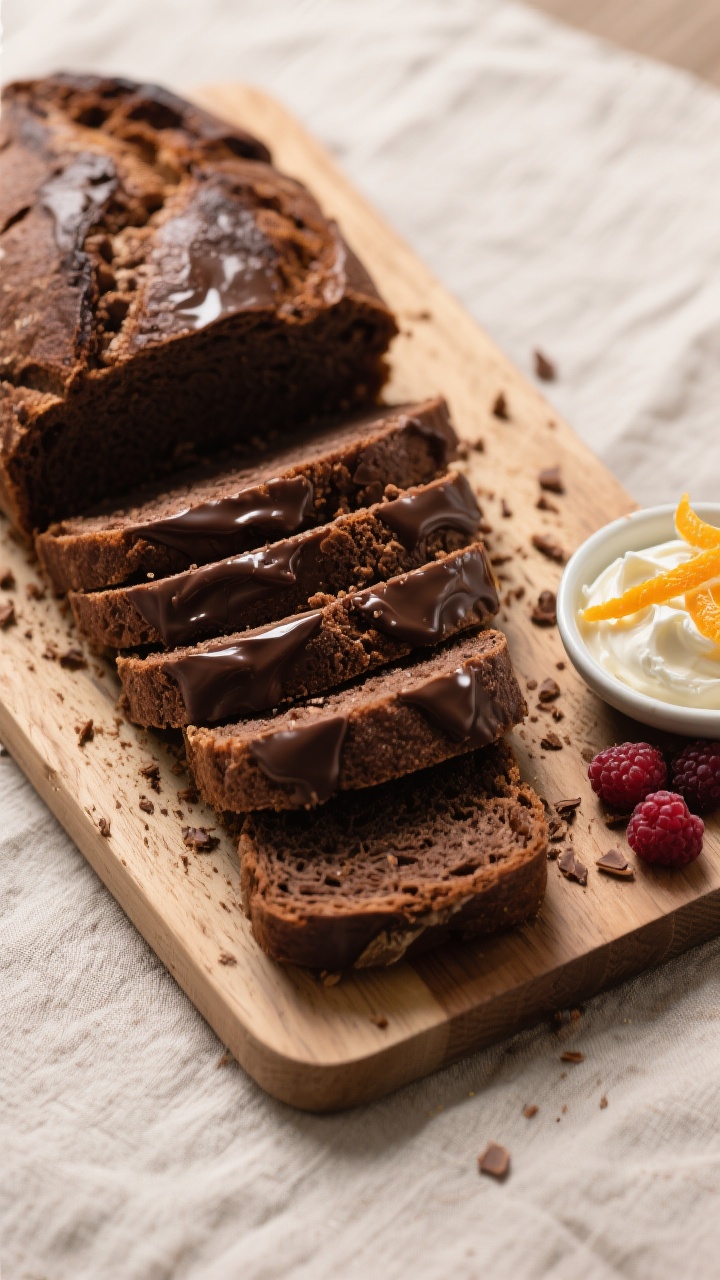
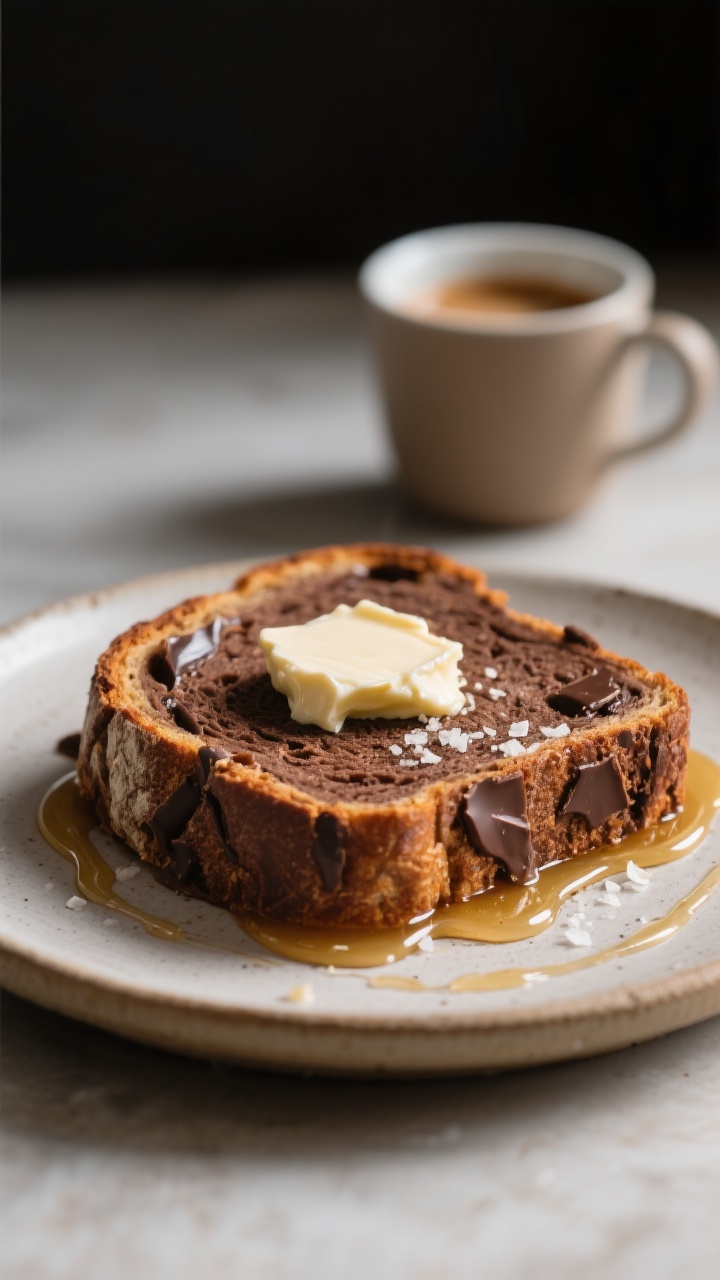
If you love the tang of sourdough and the comfort of chocolate, this loaf brings both together in one warm, fragrant kitchen moment. It’s not a dessert and not quite a standard bread—it’s somewhere in the middle, with gentle sweetness and deep cocoa notes. Slice it for breakfast with butter, pair it with coffee in the afternoon, or serve it with a little mascarpone and berries for an easy treat.
The dough is soft, the crust is crisp, and the aroma while it bakes is unreal. You don’t need special tools beyond a sturdy bowl and a baking pot.
What Makes This Special
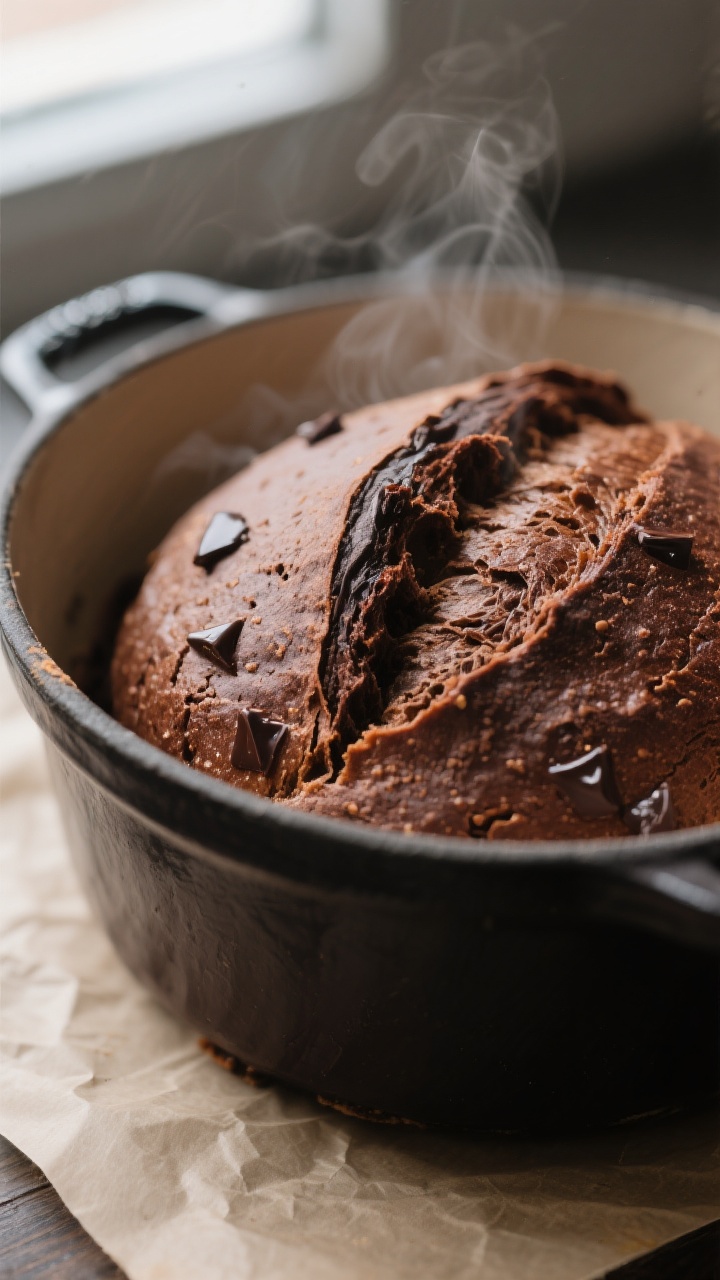
This bread balances the light tang of sourdough with rich cocoa and melty chocolate bits. It’s not sugary or cake-like, so it works across meals.
You get the structure and chew of sourdough, but with warm chocolate depth in every bite.
- Natural leavening: Sourdough starter gives lift, flavor, and a long shelf life.
- Better texture: The dough stays moist and tender, thanks to cocoa and a touch of oil.
- Flexible sweetness: Add-ins like chocolate chips or dried cherries let you decide how sweet it gets.
- Everyday friendly: Uses common pantry items and a relaxed timeline.
Shopping List
- Active, bubbly sourdough starter (100% hydration)
- Bread flour (or a mix of bread and all-purpose)
- Unsweetened cocoa powder (natural or Dutch-process)
- Warm water
- Granulated sugar or brown sugar
- Salt (fine sea salt or kosher)
- Neutral oil (like sunflower or light olive) or softened butter
- Semi-sweet or dark chocolate chips/chunks
- Optional: espresso powder, vanilla extract, orange zest, or dried cherries
- Rice flour or extra all-purpose for dusting the proofing basket
Step-by-Step Instructions
- Refresh your starter (morning or night before): Feed your starter so it’s active and bubbly when you mix the dough. It should double in 4–8 hours and pass the float test. If it’s sluggish, give it one more feeding.
- Mix the dough (autolyse): In a large bowl, whisk 25 g cocoa powder with 375 g warm water until smooth.
Stir in 450 g bread flour until no dry spots remain. Cover and rest 30–45 minutes. This hydrates the flour and makes mixing easier.
- Add the starter and seasonings: Add 100 g active starter, 35 g sugar, and 8 g salt.
Drizzle in 15 g neutral oil. Squish and fold the dough by hand until everything is evenly combined and the dough looks cohesive. It will be tacky, not stiff.
- Strengthen the dough (first hour): Over the next hour, do 3 sets of stretch-and-folds, spaced 20 minutes apart.
With wet hands, pull one side up and fold it over, turning the bowl and repeating 4–6 times per set. This builds gluten without kneading.
- Add chocolate: After the last fold, gently work in 120–150 g chocolate chips or chunks. If using extras like dried cherries (60–80 g), fold them in now.
Avoid overworking, which can smear chocolate.
- Bulk fermentation: Cover and let the dough rise at warm room temp (75–78°F / 24–26°C) for 3–5 hours, until puffed with small bubbles and about 50–75% larger. Cocoa can slow fermentation slightly, so watch the dough, not the clock.
- Pre-shape: Lightly flour the counter. Turn out the dough, gently pat into a round, and fold the edges toward the center to make a loose ball.
Rest uncovered for 15–20 minutes to relax.
- Final shape: For a boule, flip the dough and tighten it into a round by tucking edges under and dragging gently to create surface tension. For a batard, pat into a rectangle, fold like a letter, and roll into a log.
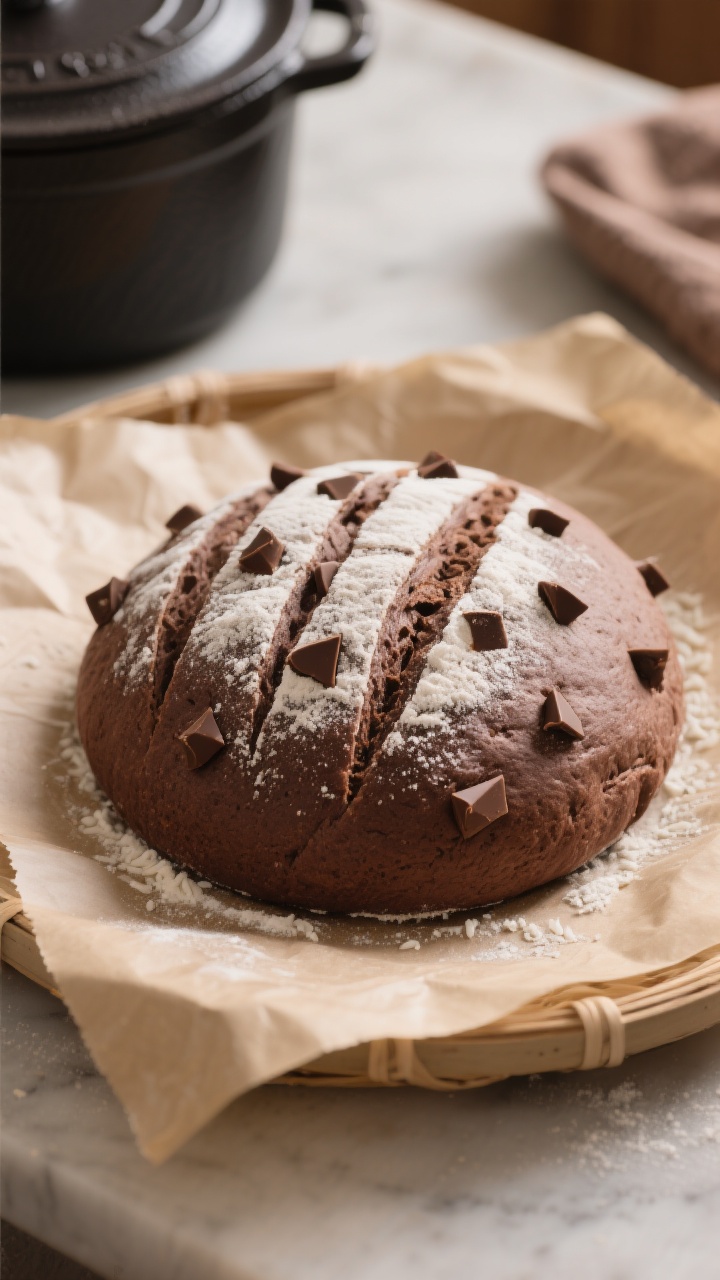
- Proof: Dust a banneton with rice flour. Place the dough seam-side up.
Cover and refrigerate 10–16 hours for cold proofing. This improves flavor and makes scoring easier. You can also proof at room temp 60–90 minutes, but chilling is simpler for beginners.
- Preheat and bake: Place a Dutch oven with lid in your oven and preheat to 475°F (245°C) for at least 30 minutes.
Turn the chilled dough onto parchment, score the top with a sharp blade (a long central slash works well), and carefully lower it into the hot pot.
- Steam bake: Bake 20 minutes covered. Reduce heat to 450°F (232°C), remove the lid, and bake another 20–25 minutes until the crust is set and the loaf sounds hollow. Aim for a deep brown, not black; cocoa makes the crust dark sooner, so rely on aroma and feel.
- Cool completely: Move to a rack and cool at least 1–2 hours before slicing.
The crumb sets as it cools. Cutting too early makes it gummy.
Keeping It Fresh
Let the loaf cool fully, then store it cut side down on a board for the first day. After that, keep it in a paper bag or bread box for 2–3 days.
Avoid plastic at room temp—it softens the crust and can make the crumb sticky.
For longer storage, slice and freeze. Wrap slices well and freeze up to a month. Toast straight from frozen for a quick, melty-chocolate treat.
Benefits of This Recipe
- Balanced flavor: Mild sweetness, a little tang, and rich cocoa make it versatile.
- Beginner-friendly method: Stretch-and-folds and cold proofing simplify shaping and timing.
- Flexible ingredients: Works with bread or all-purpose flour and different chocolates.
- Better nutrition than cake: Lower sugar and natural fermentation.
- Great for leftovers: Excellent as French toast, bread pudding, or fancy grilled cheese with brie.
Common Mistakes to Avoid
- Underactive starter: If the starter isn’t lively, the loaf will be dense.
Make sure it rises predictably and smells pleasantly tangy before using.
- Too much flour during shaping: Extra flour prevents the surface from sealing, which limits oven spring.
- Overproofing: The dough should be airy but still elastic. If it spreads and won’t hold shape, it’s gone too far. Chill earlier next time.
- Burning the crust: Cocoa darkens quickly.
Reduce heat a bit in the second half if your oven runs hot, and trust the internal cues.
- Cutting too soon: Patience matters. Let it cool so the crumb sets and the chocolate firms up.
Variations You Can Try
- Mocha Loaf: Add 1–2 teaspoons espresso powder to the cocoa-water mix for coffee depth.
- Orange-Chocolate: Zest one orange into the dough and swap half the water for orange juice.
- Cherry Chunk: Fold in dried cherries or cranberries with the chocolate for sweet-tart pops.
- Nutty Crunch: Add toasted hazelnuts or almonds for texture and flavor.
- Spiced: A pinch of cinnamon or cardamom adds warmth without overpowering the cocoa.
FAQ
Can I use all-purpose flour instead of bread flour?
Yes. All-purpose will give a slightly softer crumb and may need a touch less water.
Start with the same amount, then hold back a tablespoon or two of water if the dough feels loose.
How sweet is this bread?
It’s gently sweet, more like a breakfast bread than cake. If you prefer sweeter, increase sugar to 50–60 g and use milk chocolate chips. For less sweet, drop the sugar to 20 g and stick with dark chocolate.
Do I need a Dutch oven?
No, but it helps with oven spring.
As an alternative, preheat a baking stone or sheet and add a tray of hot water to create steam, or cover the loaf with a large metal bowl for the first 20 minutes.
Why does cocoa slow fermentation?
Cocoa increases dough density and can absorb some water, making the dough stiffer. This slightly slows yeast and bacterial activity. Warm room temperature and an active starter help keep things moving.
How do I know the dough is fully proofed?
Press a floured fingertip into the dough.
If the dent springs back slowly and not all the way, it’s ready. If it pops right back, give it more time; if it collapses or doesn’t spring, it’s overproofed.
Can I make this dairy-free?
Yes. Use oil instead of butter and dairy-free chocolate.
Everything else remains the same.
What’s the best way to slice it?
Use a long, sharp serrated knife and let the loaf cool completely. For neat slices with intact chocolate pieces, wipe the blade between cuts.
Can I add sour cream or milk?
You can, but adjust hydration. Replace 50–75 g of water with milk or sour cream, and be ready to add a splash more water if the dough feels tight.
Wrapping Up
Chocolate sourdough bread gives you the comfort of cocoa with the chew and character of a classic loaf.
It’s reliable, flexible, and works for breakfast, snacks, or a simple dessert. Once you master the timing, it slides neatly into your weekly bake. Keep your starter lively, trust your senses, and enjoy the kind of loaf that makes the whole kitchen smell like a cozy bakery.
Chocolate Sourdough Bread - A Cozy, Bakery-Style Loaf at Home
Ingredients
Method
- Refresh your starter (morning or night before): Feed your starter so it’s active and bubbly when you mix the dough. It should double in 4–8 hours and pass the float test. If it’s sluggish, give it one more feeding.
- Mix the dough (autolyse): In a large bowl, whisk 25 g cocoa powder with 375 g warm water until smooth.Stir in 450 g bread flour until no dry spots remain. Cover and rest 30–45 minutes. This hydrates the flour and makes mixing easier.
- Add the starter and seasonings: Add 100 g active starter, 35 g sugar, and 8 g salt.Drizzle in 15 g neutral oil. Squish and fold the dough by hand until everything is evenly combined and the dough looks cohesive. It will be tacky, not stiff.
- Strengthen the dough (first hour): Over the next hour, do 3 sets of stretch-and-folds, spaced 20 minutes apart.With wet hands, pull one side up and fold it over, turning the bowl and repeating 4–6 times per set. This builds gluten without kneading.
- Add chocolate: After the last fold, gently work in 120–150 g chocolate chips or chunks. If using extras like dried cherries (60–80 g), fold them in now.Avoid overworking, which can smear chocolate.
- Bulk fermentation: Cover and let the dough rise at warm room temp (75–78°F / 24–26°C) for 3–5 hours, until puffed with small bubbles and about 50–75% larger. Cocoa can slow fermentation slightly, so watch the dough, not the clock.
- Pre-shape: Lightly flour the counter. Turn out the dough, gently pat into a round, and fold the edges toward the center to make a loose ball.Rest uncovered for 15–20 minutes to relax.
- Final shape: For a boule, flip the dough and tighten it into a round by tucking edges under and dragging gently to create surface tension. For a batard, pat into a rectangle, fold like a letter, and roll into a log.
- Proof: Dust a banneton with rice flour. Place the dough seam-side up.Cover and refrigerate 10–16 hours for cold proofing. This improves flavor and makes scoring easier. You can also proof at room temp 60–90 minutes, but chilling is simpler for beginners.
- Preheat and bake: Place a Dutch oven with lid in your oven and preheat to 475°F (245°C) for at least 30 minutes.Turn the chilled dough onto parchment, score the top with a sharp blade (a long central slash works well), and carefully lower it into the hot pot.
- Steam bake: Bake 20 minutes covered. Reduce heat to 450°F (232°C), remove the lid, and bake another 20–25 minutes until the crust is set and the loaf sounds hollow. Aim for a deep brown, not black; cocoa makes the crust dark sooner, so rely on aroma and feel.
- Cool completely: Move to a rack and cool at least 1–2 hours before slicing.The crumb sets as it cools. Cutting too early makes it gummy.
Printable Recipe Card
Want just the essential recipe details without scrolling through the article? Get our printable recipe card with just the ingredients and instructions.
Sumayya is a home cook and recipe creator who shares simple, flavorful recipes made for everyday cooking. She believes good food should be easy, comforting, and enjoyed by everyone.