Korean Fried Chicken Recipe – Crispy, Saucy, and Irresistible

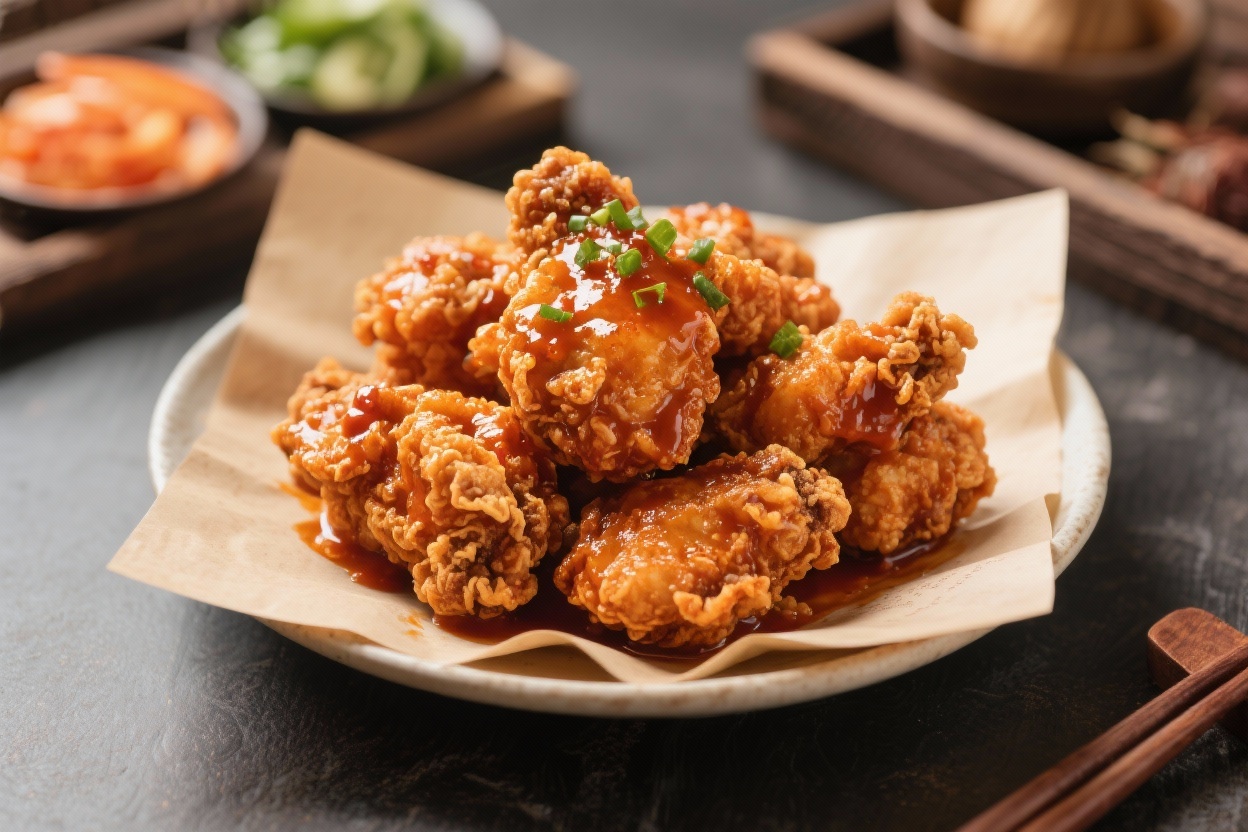
Korean fried chicken is famous for its shatteringly crisp crust and sticky-sweet heat. It’s lighter and crunchier than many Western-style versions, and the sauce is a perfect balance of savory, spicy, and sweet. You don’t need special equipment or hard-to-find ingredients to make it at home.
With a few smart tricks, you’ll get chicken that stays crunchy even after saucing. If you’re craving takeout-level goodness without leaving your kitchen, this recipe will become a go-to.
Ingredients
Method
- Prep the chicken: Pat the chicken very dry with paper towels. Removing surface moisture is key to a crisp crust.
- Marinate briefly: In a bowl, mix soy sauce, rice vinegar, garlic, ginger, and sugar. Toss the chicken to coat and let sit for 15–20 minutes. Don’t over-marinate.
- Heat the oil: Pour oil into a heavy pot to a depth of 2–3 inches. Heat to 330–340°F (165–170°C) for the first fry. Keep a thermometer handy.
- Prepare the coating: In a large bowl, whisk starch, salt, and pepper. Dredge the chicken pieces, pressing lightly so the starch adheres. Shake off excess.
- First fry (par-fry): Fry in batches without crowding, 4–6 minutes for wings or small thigh pieces, until pale golden and set. The goal is to cook through without deep color. Drain on a rack.
- Make the sauce: In a small saucepan over low heat, combine gochujang, ketchup, honey (or brown sugar), soy sauce, rice vinegar, garlic, ginger, and sesame oil. Warm gently, stirring, until glossy. If it’s too thick, add 1–2 tablespoons water. Turn off heat.
- Second fry (crisping): Increase oil to 360–375°F (182–190°C). Fry the par-cooked chicken again, 2–3 minutes, until deep golden and very crisp. Drain on a rack for 2 minutes.
- Sauce and toss: Transfer chicken to a large bowl. Drizzle the warm sauce over and toss quickly to coat. You want a thin, even glaze, not a heavy blanket.
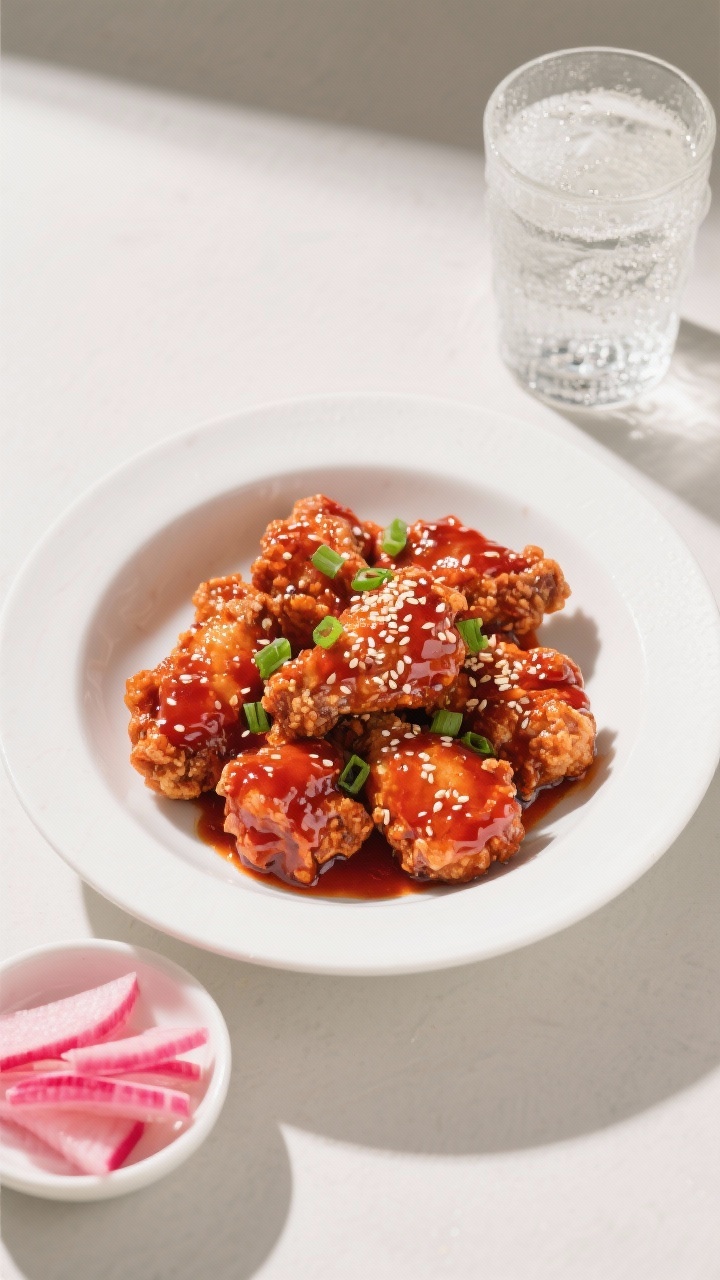
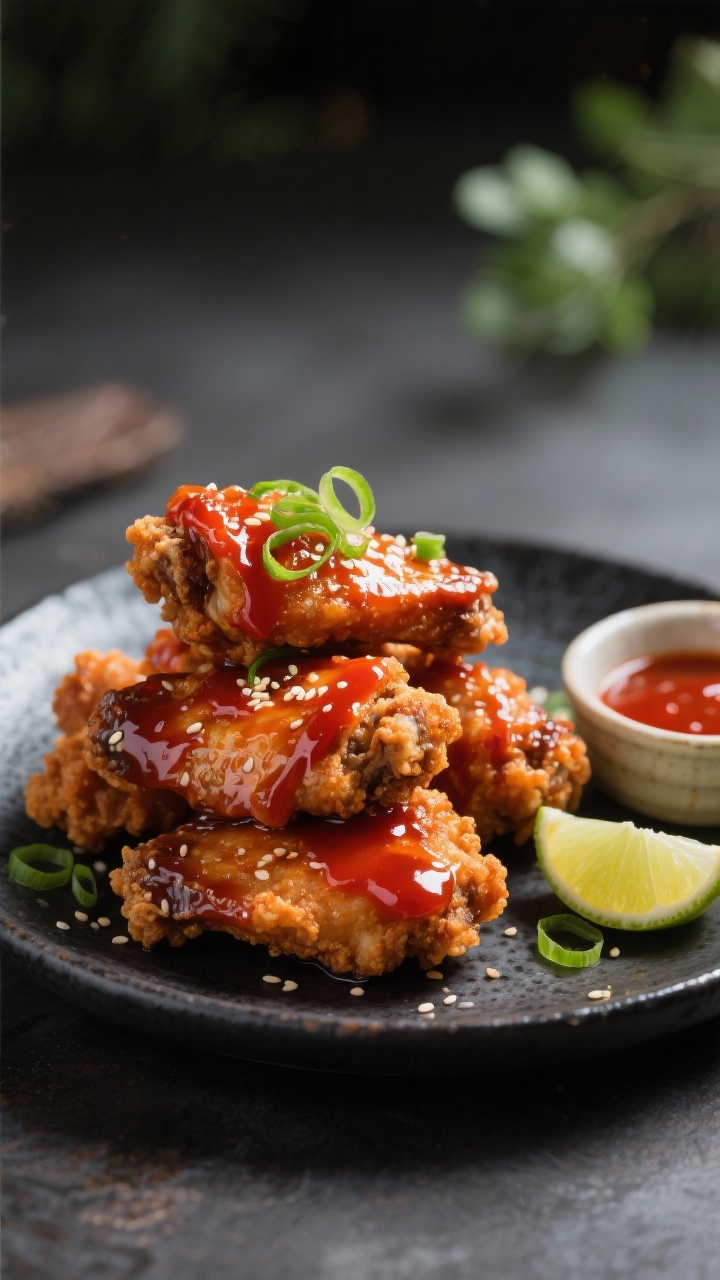
- Garnish and serve: Sprinkle with sesame seeds and green onions. Serve immediately with pickled radish and cold beer or sparkling water.
Why This Recipe Works
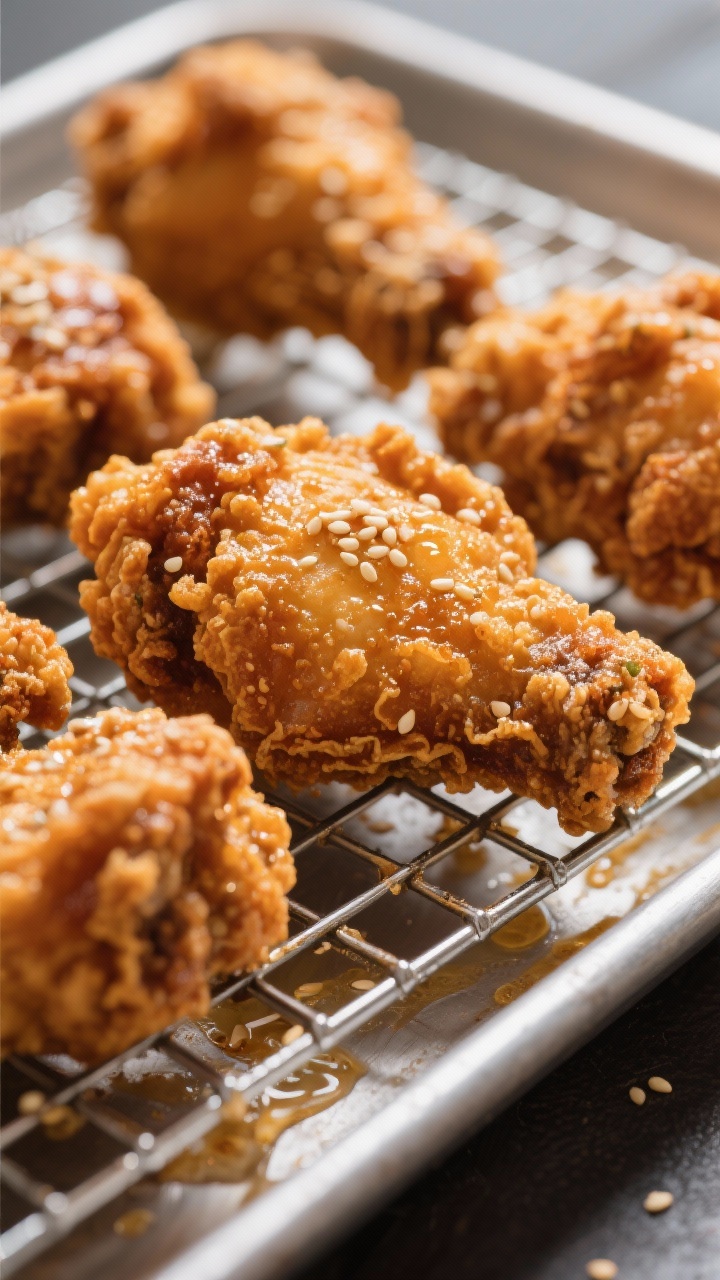
- Double-fry technique: Frying the chicken twice drives out excess moisture, creating a brittle, ultra-crisp crust that holds up to sauce.
- Starch-based coating: Potato or cornstarch makes a thinner, crunchier shell than flour, giving that signature crackle.
- Simple marinade: A quick soak with soy, garlic, and ginger seasons the meat from within without making it soggy.
- Balanced sauce: Gochujang brings heat and depth, while honey (or brown sugar) adds gloss and sweetness. Vinegar keeps it bright.
- Controlled oil temperature: Frying at the right heat prevents greasy chicken and ensures even browning.
Shopping List
- Chicken: 2 pounds chicken wings or boneless thighs, cut into bite-size pieces
- Marinade: 3 tablespoons soy sauce, 1 tablespoon rice vinegar, 1 tablespoon minced garlic, 1 teaspoon grated ginger, 1 teaspoon sugar
- Coating: 1 cup potato starch or cornstarch, 1/2 teaspoon salt, 1/2 teaspoon black pepper
- Frying oil: Neutral oil like canola, peanut, or vegetable (enough for 2–3 inches in a pot)
- Sauce: 3 tablespoons gochujang (Korean chili paste), 2 tablespoons ketchup, 3 tablespoons honey or brown sugar, 2 tablespoons soy sauce, 1 tablespoon rice vinegar, 2 cloves garlic (minced), 1 teaspoon grated ginger, 1 tablespoon sesame oil, 1–2 tablespoons water to thin if needed
- Garnish (optional): Toasted sesame seeds, thinly sliced green onions, pickled radish on the side
Step-by-Step Instructions

- Prep the chicken: Pat the chicken very dry with paper towels.
Removing surface moisture is key to a crisp crust.
- Marinate briefly: In a bowl, mix soy sauce, rice vinegar, garlic, ginger, and sugar. Toss the chicken to coat and let sit for 15–20 minutes. Don’t over-marinate.
- Heat the oil: Pour oil into a heavy pot to a depth of 2–3 inches.
Heat to 330–340°F (165–170°C) for the first fry. Keep a thermometer handy.
- Prepare the coating: In a large bowl, whisk starch, salt, and pepper. Dredge the chicken pieces, pressing lightly so the starch adheres.
Shake off excess.
- First fry (par-fry): Fry in batches without crowding, 4–6 minutes for wings or small thigh pieces, until pale golden and set. The goal is to cook through without deep color. Drain on a rack.
- Make the sauce: In a small saucepan over low heat, combine gochujang, ketchup, honey (or brown sugar), soy sauce, rice vinegar, garlic, ginger, and sesame oil.
Warm gently, stirring, until glossy. If it’s too thick, add 1–2 tablespoons water. Turn off heat.
- Second fry (crisping): Increase oil to 360–375°F (182–190°C).
Fry the par-cooked chicken again, 2–3 minutes, until deep golden and very crisp. Drain on a rack for 2 minutes.
- Sauce and toss: Transfer chicken to a large bowl. Drizzle the warm sauce over and toss quickly to coat.
You want a thin, even glaze, not a heavy blanket.
- Garnish and serve: Sprinkle with sesame seeds and green onions. Serve immediately with pickled radish and cold beer or sparkling water.
Storage Instructions
- Short-term: Keep leftover chicken in an airtight container in the fridge for up to 2 days. The crust will soften but still taste great.
- Reheating: Re-crisp in a 375°F (190°C) oven or air fryer for 8–10 minutes.
If sauced, reheat on a rack to allow airflow. Add a touch more sauce after reheating if it looks dry.
- Make-ahead: You can fry once (par-fry), cool completely, and refrigerate up to 24 hours. Do the second fry right before serving, then sauce.
- Freezing: Par-fried pieces freeze well.
Freeze on a sheet until solid, then bag up to 1 month. Fry from frozen at 360–375°F until crisp and hot.
Why This is Good for You
- Portion control: Small, punchy pieces mean a little goes a long way in satisfaction.
- Protein-rich: Chicken provides high-quality protein to keep you full.
- Customizable heat: You control the spice and sugar, making it easier to fit your goals.
- Balanced flavors: The bold sauce pairs well with crunchy veggies or a side salad for a more rounded meal.
What Not to Do
- Don’t skip drying the chicken: Moisture kills crispness. Pat thoroughly.
- Don’t overcrowd the pot: Too many pieces drop the oil temp and cause soggy, greasy chicken.
- Don’t rush the double fry: The second fry is what creates that glassy crunch.
- Don’t sauce too early: Toss just before serving to preserve texture.
- Don’t use high heat for the sauce: Gochujang can scorch.
Gentle heat keeps it smooth and shiny.
Alternatives
- Oven-baked version: Toss marinated chicken with 2 tablespoons oil and starch. Bake on a rack at 425°F (220°C) for 25–35 minutes, flipping once, until crisp, then sauce. Not as shatter-crisp but still great.
- Air fryer version: Lightly oil coated chicken.
Air fry at 390°F (200°C) for 16–22 minutes, shaking halfway. Sauce afterward.
- No gochujang? Mix 2 tablespoons sriracha with 1 tablespoon miso or tomato paste for depth. Adjust sugar to taste.
- Gluten-free tweaks: Use tamari instead of soy sauce and potato starch for coating.
- Less spicy: Cut gochujang in half and add more ketchup and honey.
You’ll get a sweeter, milder glaze.
- Bone-in pieces: Drumsticks and wings work well. Increase first-fry time to ensure the meat cooks through.
FAQ
Can I use breast meat?
Yes. Cut into 1.5-inch chunks and marinate briefly.
Breast cooks faster and can dry out, so keep pieces uniform and watch your timing.
How do I know the oil temperature is right without a thermometer?
Dip a chopstick or wooden spoon handle into the oil. Steady bubbles rising means it’s hot enough; violent bubbling means too hot. A thermometer is more reliable, though.
Why is my chicken greasy?
The oil was likely too cool or the pot was crowded.
Fry in small batches and let the oil return to temperature between batches. Draining on a rack helps too.
What’s the best side dish?
Pickled radish (chikin-mu) is classic. A simple cabbage slaw with a light vinaigrette, steamed rice, or crisp cucumber salad also balances the richness.
Can I make the sauce ahead?
Absolutely.
Make it up to 1 week in advance and keep it in the fridge. Warm gently before tossing with the chicken.
Is there a non-spicy version?
Yes. Skip gochujang and use ketchup plus soy, honey, garlic, and a little sesame oil.
Add a splash of rice vinegar for brightness.
How do I keep the crust from clumping?
Shake off excess starch and fry immediately after dredging. If the starch turns gummy, it sat too long with moisture.
Final Thoughts
Korean fried chicken hits that perfect spot between crunchy and saucy, bold and balanced. With a quick marinade, a starch coating, and the double-fry method, you’ll get restaurant-level results at home.
Keep the oil hot, sauce at the end, and serve right away. Once you nail the method, you can tweak the heat and sweetness to make it your own. It’s a crowd-pleaser you’ll come back to again and again.
Printable Recipe Card
Want just the essential recipe details without scrolling through the article? Get our printable recipe card with just the ingredients and instructions.