Chicken Cacciatore Recipe – Rustic, Comforting, and Easy

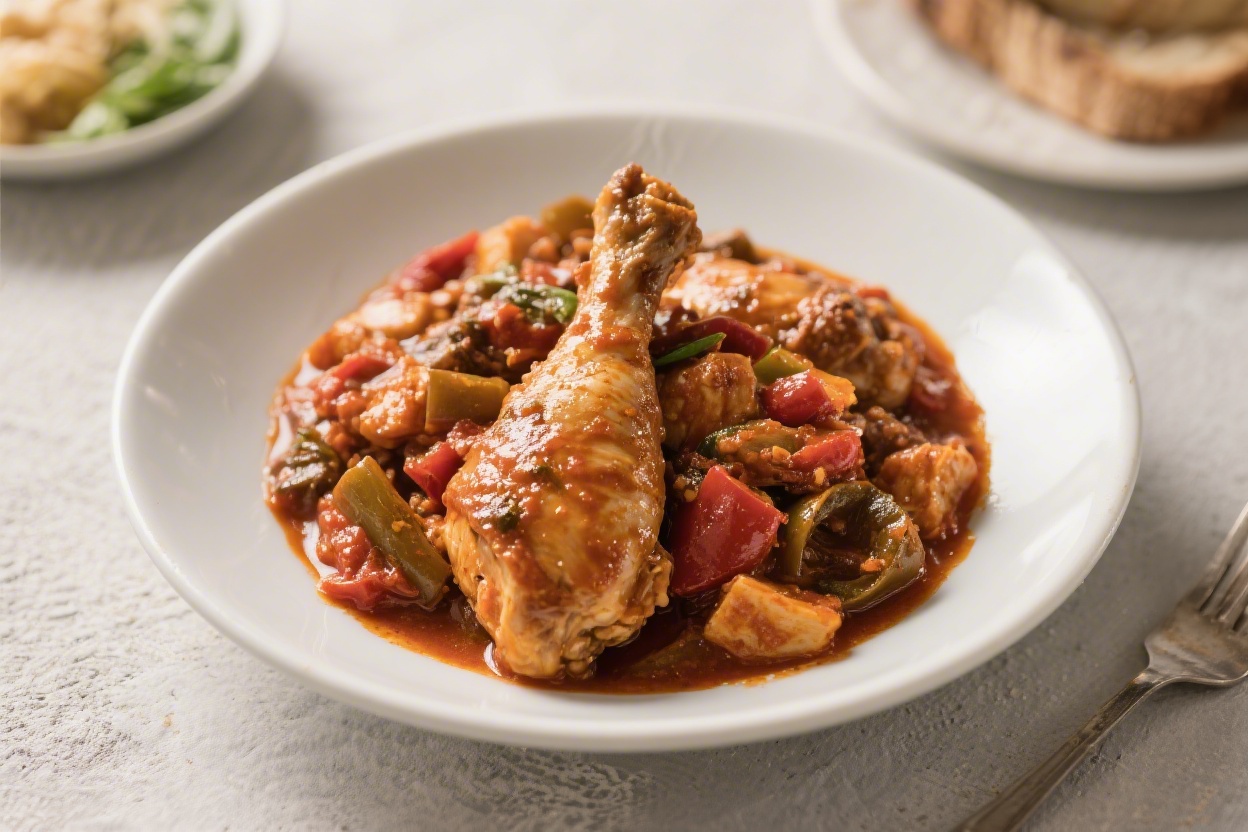
Chicken cacciatore is the kind of weeknight dinner that feels special without a ton of effort. It’s rustic Italian comfort food: tender chicken simmered with tomatoes, bell peppers, onions, mushrooms, and herbs. The sauce is rich and savory, with a little tang and sweetness from the veggies.
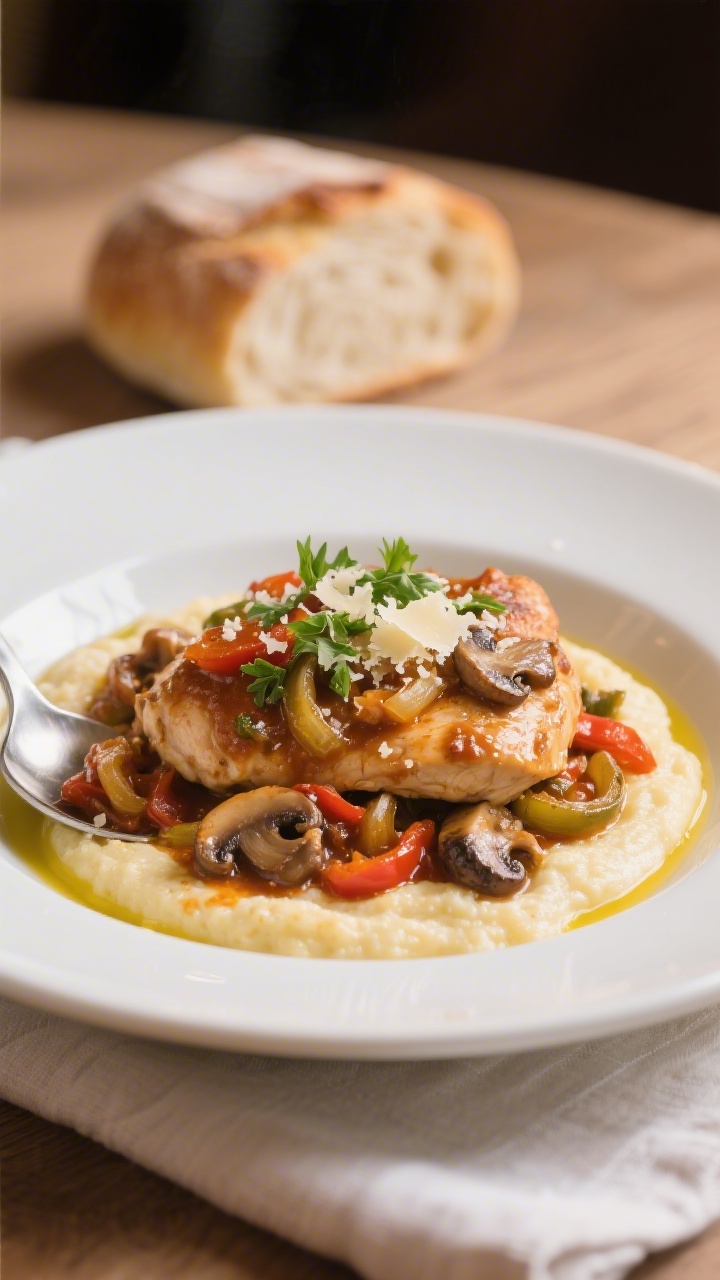
Serve it over pasta, polenta, or mashed potatoes and you’ve got a complete, cozy meal. This version keeps the spirit of the classic, but uses smart, simple steps to get great flavor with minimal fuss.
What Makes This Recipe So Good
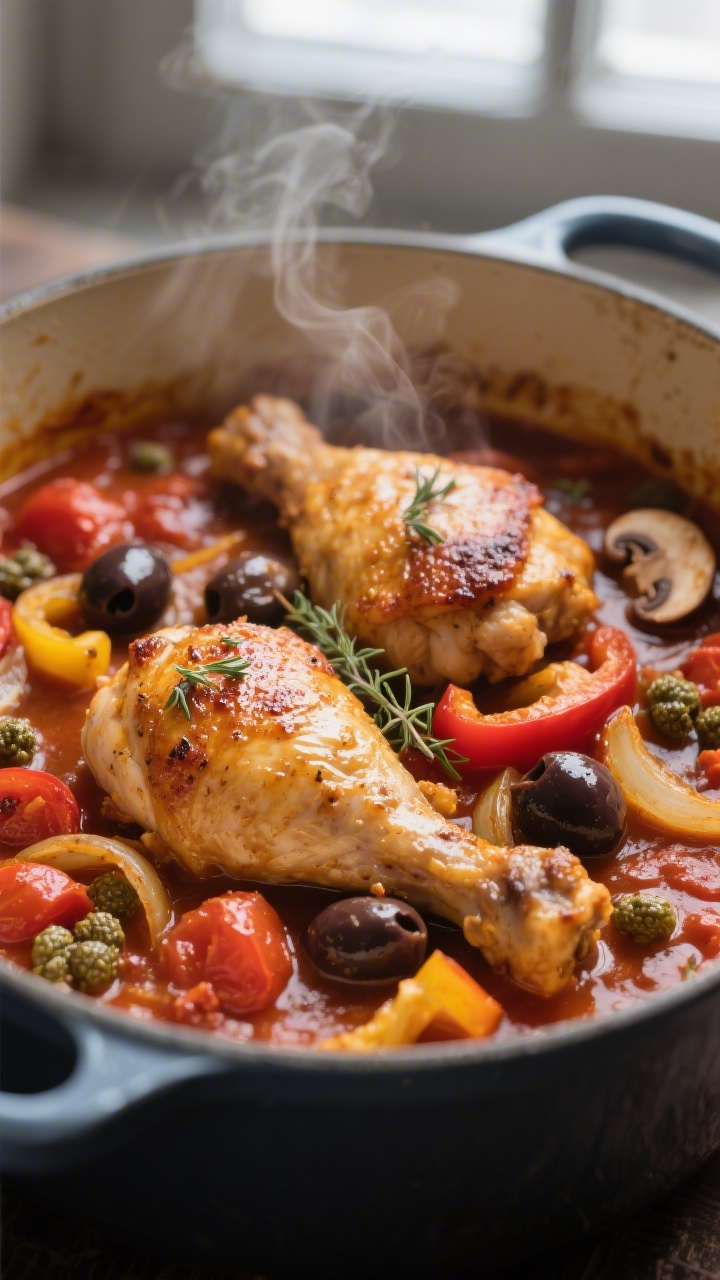
There’s a lot to love here. The chicken gets a quick sear for crispy edges, then finishes in a bright, garlicky tomato sauce that tastes like it simmered all day.
The vegetables cook down until they’re soft and sweet, and the mushrooms bring a deep, savory note. You can make it with bone-in thighs for richness, or boneless breasts for a lighter take. Either way, it’s hearty, forgiving, and hard to mess up.
- Balanced flavor: Tomato, wine, herbs, and vegetables build layers of savory, tangy, and slightly sweet notes.
- Flexible: Swap in different cuts of chicken, change up the herbs, or use what you have in the pantry.
- Make-ahead friendly: Tastes even better the next day as the flavors meld.
- One-pan approach: Less mess, easy cleanup, and a smooth cooking flow.
Shopping List
- Chicken: 2 to 2.5 pounds bone-in, skin-on thighs (or legs, or a mix).
Boneless thighs work too.
- Salt and black pepper
- Olive oil: 2 to 3 tablespoons
- Onion: 1 large, thinly sliced
- Bell peppers: 2 (red, yellow, or orange), sliced
- Mushrooms: 8 ounces, sliced (cremini or button)
- Garlic: 4 to 6 cloves, minced
- Crushed red pepper flakes: optional, a pinch for heat
- Tomato paste: 1 tablespoon
- Crushed tomatoes: 1 (28-ounce) can, or whole peeled tomatoes crushed by hand
- Dry red wine: 1/2 cup (or chicken broth if you prefer)
- Chicken broth: 1/2 to 1 cup, as needed
- Capers: 2 tablespoons, drained
- Olives: 1/3 cup pitted green or Kalamata, optional but great
- Dried oregano: 1 teaspoon
- Bay leaf: 1
- Fresh herbs: 2 tablespoons chopped parsley; a few sprigs of thyme or rosemary optional
- Parmesan cheese: optional, for serving
- Serve with: pasta, polenta, rice, mashed potatoes, or crusty bread
Instructions
- Season the chicken: Pat chicken dry. Season generously with salt and pepper on both sides. This helps the skin crisp and flavors the sauce later.
- Brown the chicken: Heat 2 tablespoons olive oil in a large, heavy skillet or Dutch oven over medium-high heat.
Sear chicken skin-side down until golden brown, about 5 to 7 minutes. Flip and sear the other side for 3 to 4 minutes. Transfer to a plate.
Don’t cook through yet.
- Sauté the vegetables: Pour off excess fat if needed, leaving about 2 tablespoons in the pan. Add onions and peppers with a pinch of salt. Cook over medium heat until softened and lightly browned, about 6 to 8 minutes.
Stir in mushrooms and cook until they release moisture and start to brown, about 5 minutes.
- Add aromatics: Stir in garlic and red pepper flakes. Cook 30 seconds, just until fragrant. Add tomato paste and cook 1 minute to caramelize slightly.
- Deglaze with wine: Pour in red wine and scrape up browned bits from the bottom of the pan.
Simmer 1 to 2 minutes to reduce slightly. If not using wine, use a splash of broth and a teaspoon of red wine vinegar for brightness.
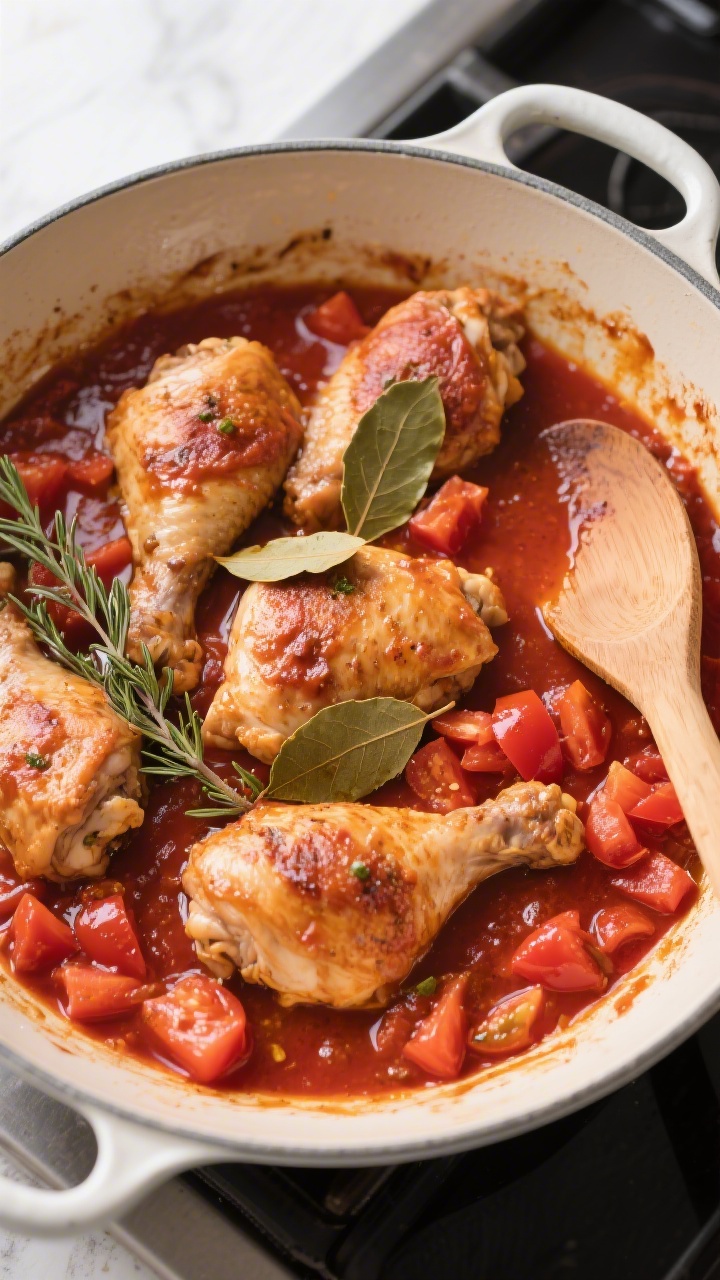
- Build the sauce: Add crushed tomatoes, capers, olives (if using), oregano, bay leaf, and a few thyme sprigs if you have them. Stir to combine.
If the sauce seems very thick, add 1/2 cup broth to loosen.
- Nestle in the chicken: Return chicken and any juices to the pan, skin-side up. The chicken should be mostly submerged, with the skin peeking out. Reduce heat to a gentle simmer.
- Simmer until tender: Cover partially and cook 25 to 35 minutes, until chicken is cooked through and tender.
Thighs should reach 175°F internally for best texture. Stir occasionally to prevent sticking.
- Adjust and finish: Remove bay leaf and herb stems. Taste the sauce.
Add salt, pepper, or a pinch of sugar if the tomatoes are very acidic. If you want a silkier sauce, stir in a small knob of butter at the end. Sprinkle with chopped parsley.
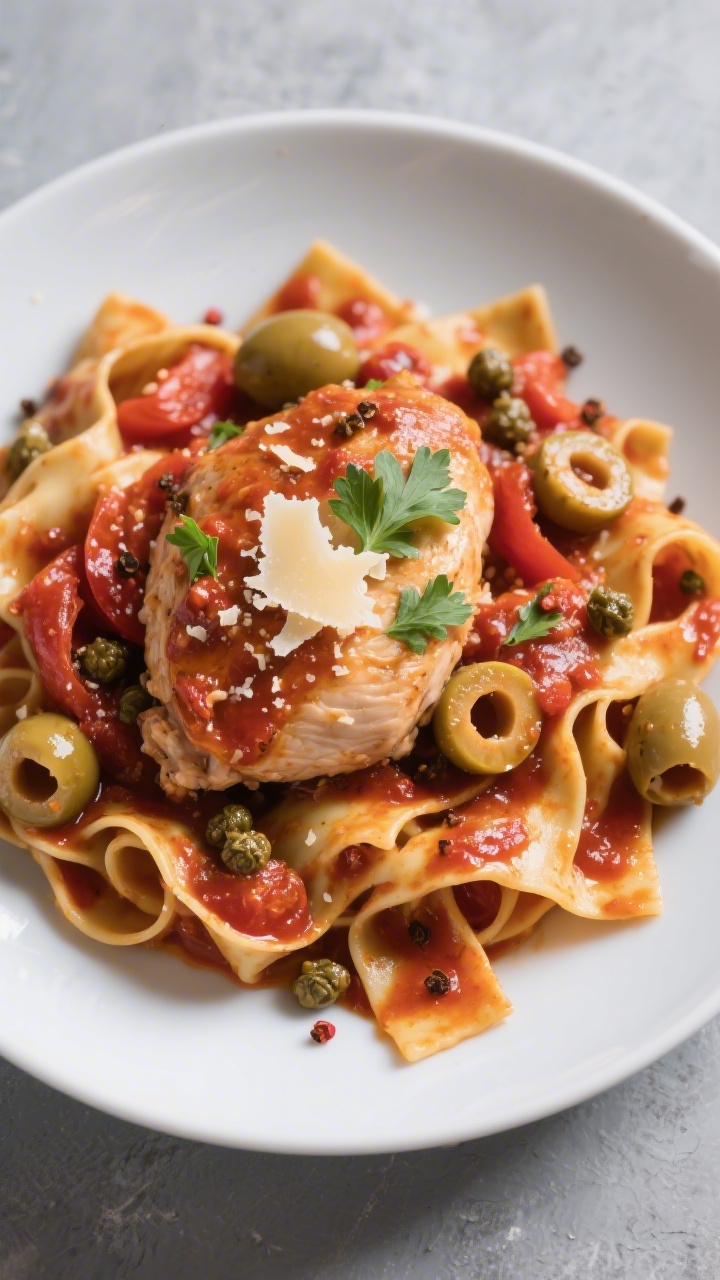
- Serve: Spoon chicken and sauce over al dente pasta, creamy polenta, or mashed potatoes.
Finish with a drizzle of olive oil and a little grated Parmesan if you like.
Keeping It Fresh
Chicken cacciatore stores well and the flavors deepen as it rests. Let it cool, then refrigerate in an airtight container for up to 4 days. For freezing, portion into freezer-safe containers and freeze up to 3 months.
Thaw overnight in the fridge. Reheat gently on the stove over low heat, adding a splash of broth or water if the sauce has thickened too much.
Pro tip: If using skin-on chicken and you care about crisp skin when reheating, rewarm the sauce separately and re-crisp the chicken under the broiler for a few minutes, then combine to serve.
Benefits of This Recipe
- Nutritious and satisfying: Lean protein, fiber-rich vegetables, and a tomato base packed with lycopene.
- Budget-friendly: Chicken thighs and pantry staples create a generous, affordable meal.
- Great for meal prep: Easy to make ahead, portions well, and reheats beautifully.
- Company-worthy: Feels rustic and homestyle, yet elegant enough for guests.
What Not to Do
- Don’t rush the browning step: Skipping or speeding through searing means less flavor in the sauce.
- Don’t overcrowd the pan: If needed, brown chicken in batches so it actually sears instead of steaming.
- Don’t over-reduce early: Keep some liquid in the sauce; it will thicken as it simmers with the chicken.
- Don’t forget to taste and adjust: Tomatoes vary. A pinch of salt, pepper, or sugar at the end can bring everything into balance.
- Don’t overcook chicken breasts: If using boneless, skinless breasts, simmer less time to avoid dryness.
Recipe Variations
- White wine version: Swap red wine for dry white.
Use rosemary and thyme, and add a squeeze of lemon at the end.
- Spicy arrabbiata twist: Double the red pepper flakes, add a chopped Calabrian chile, and finish with extra olive oil.
- Olive-free, caper-only: Skip olives and lean on capers for briny brightness.
- Veggie boost: Add diced carrots and celery with the onions for a heartier base.
- Boneless quick cacciatore: Use boneless thighs or breasts, cut into large chunks. Brown, then simmer 15 to 20 minutes total.
- Slow cooker method: Brown chicken and sauté aromatics first, then transfer to slow cooker with tomatoes and seasonings. Cook on Low 6 to 7 hours or High 3 to 4 hours.
- No-wine option: Use chicken broth plus 1 to 2 teaspoons red wine vinegar or balsamic for acidity.
FAQ
Can I make chicken cacciatore ahead of time?
Yes.
It actually tastes better the next day. Cool, refrigerate, and reheat gently on the stove. Add a splash of broth if the sauce thickens too much.
Which chicken cut works best?
Bone-in, skin-on thighs are ideal because they stay juicy and add rich flavor.
Drumsticks are great too. If you prefer white meat, use breasts but reduce the simmer time to keep them tender.
Do I need wine for authentic flavor?
Wine adds depth, but it’s not mandatory. You can use chicken broth and a small splash of vinegar for brightness.
The dish will still taste fantastic.
What should I serve with it?
Pasta is classic, especially wide noodles. Polenta, mashed potatoes, or a crusty loaf for dunking are also perfect. Keep sides simple to let the sauce shine.
How do I thicken the sauce?
Let it simmer uncovered for a few minutes at the end to reduce.
You can also mash a few pieces of tomato against the pan or stir in a teaspoon of tomato paste while it simmers.
Can I add more vegetables?
Absolutely. Zucchini, carrots, celery, or even a handful of spinach near the end work well. Just keep the pan from overcrowding by sautéing in stages.
Is this recipe gluten-free?
The cacciatore itself is naturally gluten-free.
Serve it over polenta, rice, or gluten-free pasta to keep the whole meal gluten-free.
How spicy is it?
It’s mild by default. Add crushed red pepper flakes to taste if you want a gentle kick, or leave them out for a no-heat version.
Final Thoughts
Chicken cacciatore is the kind of classic that never goes out of style. It’s simple, full of flavor, and fits both busy weeknights and relaxed weekends.
With a few pantry staples and fresh vegetables, you’ll have a rich, comforting sauce and tender chicken every time. Keep the method, play with the details, and make it your own. Then pass the bread—there won’t be a drop left on the plate.
Ingredients
Method
- Season the chicken: Pat chicken dry. Season generously with salt and pepper on both sides. This helps the skin crisp and flavors the sauce later.
- Brown the chicken: Heat 2 tablespoons olive oil in a large, heavy skillet or Dutch oven over medium-high heat. Sear chicken skin-side down until golden brown, about 5 to 7 minutes. Flip and sear the other side for 3 to 4 minutes. Transfer to a plate. Don’t cook through yet.
- Sauté the vegetables: Pour off excess fat if needed, leaving about 2 tablespoons in the pan. Add onions and peppers with a pinch of salt. Cook over medium heat until softened and lightly browned, about 6 to 8 minutes. Stir in mushrooms and cook until they release moisture and start to brown, about 5 minutes.
- Add aromatics: Stir in garlic and red pepper flakes. Cook 30 seconds, just until fragrant. Add tomato paste and cook 1 minute to caramelize slightly.
- Deglaze with wine: Pour in red wine and scrape up browned bits from the bottom of the pan. Simmer 1 to 2 minutes to reduce slightly. If not using wine, use a splash of broth and a teaspoon of red wine vinegar for brightness.
- Build the sauce: Add crushed tomatoes, capers, olives (if using), oregano, bay leaf, and a few thyme sprigs if you have them. Stir to combine. If the sauce seems very thick, add 1/2 cup broth to loosen.
- Nestle in the chicken: Return chicken and any juices to the pan, skin-side up. The chicken should be mostly submerged, with the skin peeking out. Reduce heat to a gentle simmer.
- Simmer until tender: Cover partially and cook 25 to 35 minutes, until chicken is cooked through and tender. Thighs should reach 175°F internally for best texture. Stir occasionally to prevent sticking.
- Adjust and finish: Remove bay leaf and herb stems. Taste the sauce. Add salt, pepper, or a pinch of sugar if the tomatoes are very acidic. If you want a silkier sauce, stir in a small knob of butter at the end. Sprinkle with chopped parsley.
- Serve: Spoon chicken and sauce over al dente pasta, creamy polenta, or mashed potatoes. Finish with a drizzle of olive oil and a little grated Parmesan if you like.
Printable Recipe Card
Want just the essential recipe details without scrolling through the article? Get our printable recipe card with just the ingredients and instructions.
Sumayya is a home cook and recipe creator who shares simple, flavorful recipes made for everyday cooking. She believes good food should be easy, comforting, and enjoyed by everyone.