Vanilla Sponge Cake Recipe – Light, Fluffy, and Easy to Make

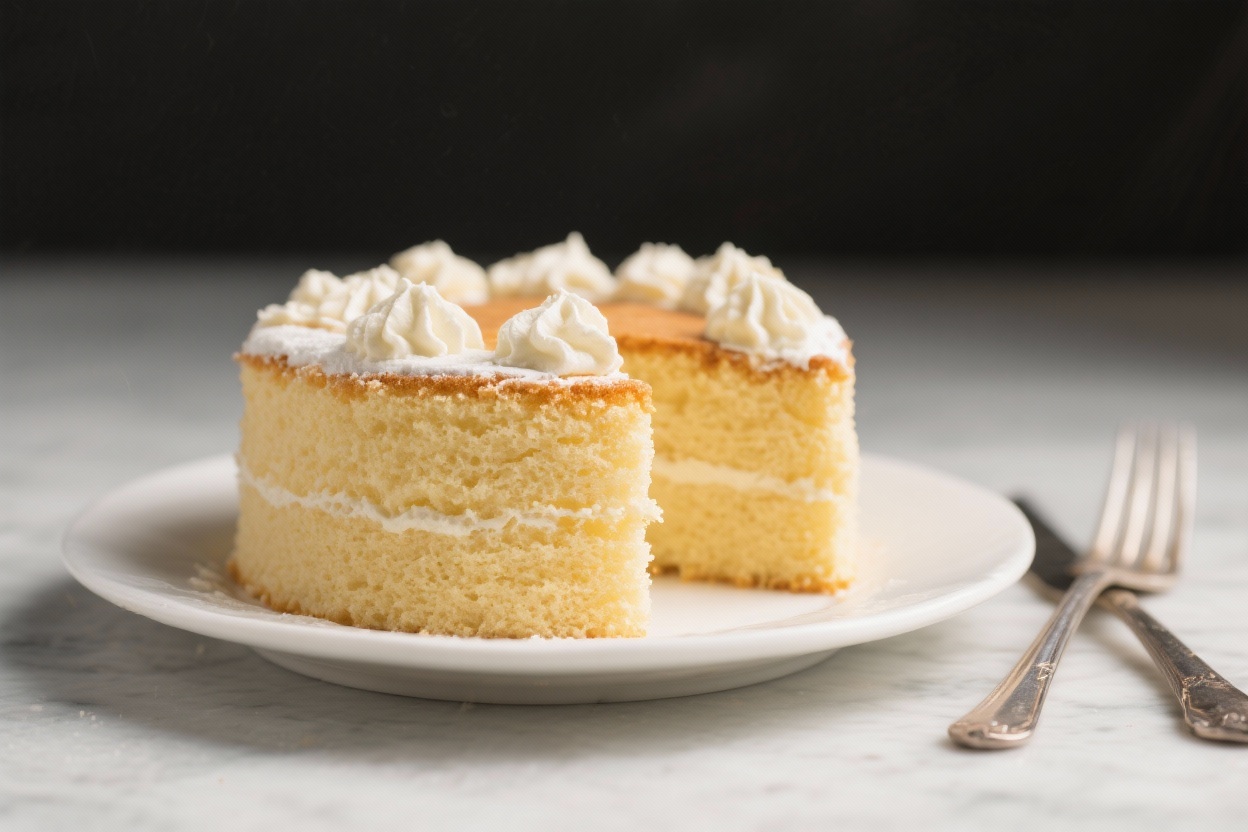
A good vanilla sponge cake is the kind of recipe you’ll use again and again. It’s simple, reliable, and perfect for birthdays, afternoon tea, or layering with your favorite fillings. This version is soft, airy, and lightly sweet with a clean vanilla flavor.
You don’t need special equipment beyond a hand mixer and a couple of cake pans. Follow these steps and you’ll get a tender crumb and a cake that rises beautifully every time.
Ingredients
Method
- Prep your pans and oven. Preheat the oven to 350°F (175°C). Grease two 8-inch round cake pans, line the bottoms with parchment, and lightly flour the sides. This prevents sticking and helps the cakes release cleanly.
- Measure ingredients accurately. For consistent results, spoon flour into your measuring cup and level it off. Better yet, use a kitchen scale. Small errors in flour or sugar can affect texture and lift.
- Whisk dry ingredients. In a bowl, whisk together 2 cups (240 g) flour, 2 teaspoons baking powder, and 1/2 teaspoon fine salt. Set aside. This evenly distributes the leavening and avoids clumps.
- Cream butter and sugar. In a large mixing bowl, beat 1/2 cup (113 g) softened unsalted butter with 1 cup (200 g) granulated sugar until light and fluffy, about 3–4 minutes. The mixture should look pale and airy. Don’t rush this step; it builds structure.
- Add eggs one at a time. Beat in 3 large eggs, one at a time, fully incorporating each before adding the next. Scrape down the bowl to ensure everything mixes evenly. Stir in 2 teaspoons vanilla extract (or 1½ teaspoons extract plus 1/2 teaspoon vanilla bean paste).
- Combine milk and oil. In a small cup, mix 2/3 cup (160 ml) whole milk with 2 tablespoons neutral oil. This keeps the crumb tender and moist.
- Alternate dry and wet. With the mixer on low, add the dry ingredients in three additions, alternating with the milk-oil mixture in two additions, beginning and ending with the dry. Mix just until combined. Overmixing will make the cake dense.
- Finish by hand. Use a spatula to fold the batter a few times, scraping the bottom and sides. You want a smooth, lump-free batter without streaks of flour.
- Divide and level. Split the batter evenly between the pans. Gently tap each pan on the counter to pop large air bubbles and smooth the surface with a spatula.
- Bake. Place pans on the middle rack and bake for 22–28 minutes. The cakes are done when they’re golden, spring back to a light touch, and a toothpick comes out clean or with a few moist crumbs.
- Cool properly. Let the cakes cool in the pans for 10 minutes, then run a knife around the edges and turn them out onto a wire rack. Peel off the parchment and cool completely. Warm cakes will melt frosting.
- Optional: Brush with simple syrup. For extra moisture, lightly brush cooled layers with simple syrup (equal parts sugar and water heated until dissolved). Don’t soak—just a thin coat.
- Frost or fill. This sponge pairs well with whipped cream, vanilla buttercream, chocolate ganache, or fresh berries. Keep layers even for a neat finish.
Why This Recipe Works

This cake uses the classic creaming method, which beats air into butter and sugar for lift and a fine texture. Adding room-temperature eggs helps the batter emulsify, creating a smooth, stable structure.
A mix of milk and a touch of oil keeps the crumb moist without making it heavy. The ratio of flour to leavening is balanced so the cake rises evenly and doesn’t sink. The result is a sponge that slices cleanly, holds frosting well, and tastes like true vanilla.
Shopping List
- All-purpose flour (or cake flour for an even lighter crumb)
- Baking powder
- Fine salt
- Unsalted butter (softened to room temperature)
- Granulated sugar
- Large eggs (room temperature)
- Whole milk (room temperature)
- Neutral oil (such as canola or vegetable)
- Pure vanilla extract
- Optional: Vanilla bean paste for extra flavor
- Optional: Confectioners’ sugar or simple syrup for brushing layers
Step-by-Step Instructions

- Prep your pans and oven. Preheat the oven to 350°F (175°C).
Grease two 8-inch round cake pans, line the bottoms with parchment, and lightly flour the sides. This prevents sticking and helps the cakes release cleanly.
- Measure ingredients accurately. For consistent results, spoon flour into your measuring cup and level it off. Better yet, use a kitchen scale.
Small errors in flour or sugar can affect texture and lift.
- Whisk dry ingredients. In a bowl, whisk together 2 cups (240 g) flour, 2 teaspoons baking powder, and 1/2 teaspoon fine salt. Set aside. This evenly distributes the leavening and avoids clumps.
- Cream butter and sugar. In a large mixing bowl, beat 1/2 cup (113 g) softened unsalted butter with 1 cup (200 g) granulated sugar until light and fluffy, about 3–4 minutes.
The mixture should look pale and airy. Don’t rush this step; it builds structure.
- Add eggs one at a time. Beat in 3 large eggs, one at a time, fully incorporating each before adding the next. Scrape down the bowl to ensure everything mixes evenly.
Stir in 2 teaspoons vanilla extract (or 1½ teaspoons extract plus 1/2 teaspoon vanilla bean paste).
- Combine milk and oil. In a small cup, mix 2/3 cup (160 ml) whole milk with 2 tablespoons neutral oil. This keeps the crumb tender and moist.
- Alternate dry and wet. With the mixer on low, add the dry ingredients in three additions, alternating with the milk-oil mixture in two additions, beginning and ending with the dry. Mix just until combined.
Overmixing will make the cake dense.
- Finish by hand. Use a spatula to fold the batter a few times, scraping the bottom and sides. You want a smooth, lump-free batter without streaks of flour.
- Divide and level. Split the batter evenly between the pans. Gently tap each pan on the counter to pop large air bubbles and smooth the surface with a spatula.
- Bake. Place pans on the middle rack and bake for 22–28 minutes.
The cakes are done when they’re golden, spring back to a light touch, and a toothpick comes out clean or with a few moist crumbs.
- Cool properly. Let the cakes cool in the pans for 10 minutes, then run a knife around the edges and turn them out onto a wire rack. Peel off the parchment and cool completely. Warm cakes will melt frosting.
- Optional: Brush with simple syrup. For extra moisture, lightly brush cooled layers with simple syrup (equal parts sugar and water heated until dissolved).
Don’t soak—just a thin coat.
- Frost or fill. This sponge pairs well with whipped cream, vanilla buttercream, chocolate ganache, or fresh berries. Keep layers even for a neat finish.
Storage Instructions
Store unfrosted layers, wrapped tightly in plastic, at room temperature for up to 24 hours. For longer storage, wrap well and freeze for up to 2 months.
Thaw wrapped at room temperature to prevent condensation from making the surface sticky. Once frosted, keep the cake covered and refrigerated if using dairy-heavy fillings. Bring slices to room temperature before serving for the best texture and flavor.
Benefits of This Recipe
- Reliable texture: Soft, airy crumb that holds shape for stacking and decorating.
- Balanced flavor: Clean vanilla notes that don’t overwhelm or taste artificial.
- Flexible: Works for cupcakes, sheet cakes, or layered celebration cakes.
- Simple ingredients: Pantry staples and no complicated techniques.
- Make-ahead friendly: Layers freeze well and stay moist after thawing.
What Not to Do
- Don’t use cold ingredients. Cold butter and eggs won’t cream or emulsify properly, leading to tunnels or a dense crumb.
- Don’t overmix. Once the flour goes in, mix only until combined.
Overdeveloped gluten makes the cake tough.
- Don’t open the oven early. Opening the door in the first 15 minutes can cause the cake to sink.
- Don’t skip parchment. It ensures the layers release cleanly without tearing.
- Don’t overbake. Dry sponge results from a few extra minutes. Check early and often near the end.
Recipe Variations
- Lemon Vanilla Sponge: Add 1 tablespoon lemon zest and replace 2 tablespoons of milk with fresh lemon juice. Finish with a lemon glaze.
- Almond Vanilla: Substitute 1 teaspoon of the vanilla with almond extract and fold in 1/3 cup finely ground almonds.
Great with raspberry jam.
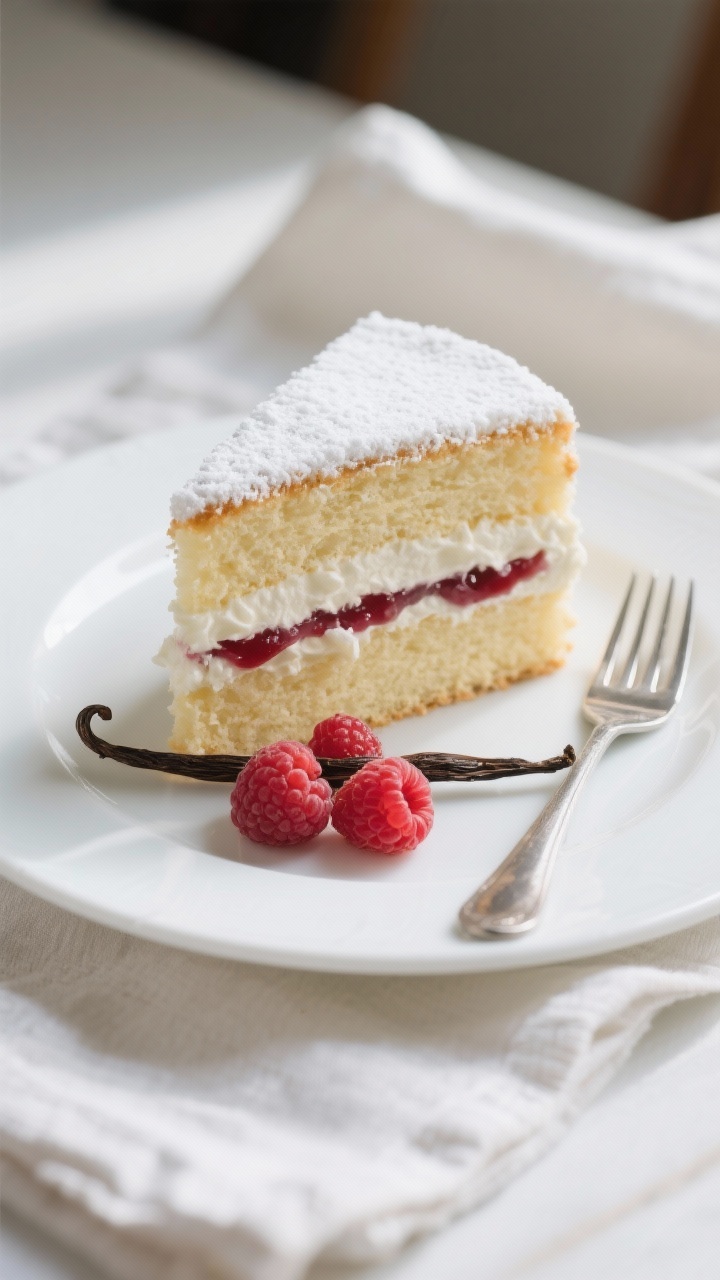
- Berry Layer Cake: Spread a thin layer of jam and whipped cream between layers. Add fresh berries for a bright, juicy bite.
- Chocolate Swirl: Remove 1/4 cup flour and replace with 1/4 cup cocoa powder. Marble the batter by swirling chocolate through vanilla.
- Dairy-Free: Use a plant-based butter and unsweetened almond milk.
Choose a neutral oil and check that your margarine is suitable for baking.
- Sheet Cake: Bake in a 9×13-inch pan for 25–32 minutes. Perfect for casual frosting and sprinkles.
- Cupcakes: Divide batter into a 12-cup muffin tin lined with papers. Bake 16–20 minutes.
FAQ
Can I use cake flour instead of all-purpose flour?
Yes.
Cake flour produces an even lighter, finer crumb. Use the same weight (240 g). If measuring by cups, use 2 1/4 cups of cake flour to match the weight.
My cake sank in the middle.
What went wrong?
This usually comes from underbaking, opening the oven too early, or too much leavening. Make sure the center springs back and a toothpick comes out clean. Measure baking powder carefully and avoid peeking during the first half of baking.
How do I get a stronger vanilla flavor?
Use a good-quality pure vanilla extract or add 1/2 teaspoon vanilla bean paste.
You can also steep a split vanilla bean in the warm milk, then cool it to room temperature before using.
Can I make this recipe without a mixer?
Yes, but it takes more effort. Use a sturdy whisk and cream the butter and sugar vigorously until very light and fluffy. Be careful not to overmix once the flour is added.
How do I keep the cake moist when storing?
Wrap layers tightly once cooled, or brush with a thin layer of simple syrup before filling.
Avoid leaving the cake uncovered in the fridge, as refrigeration can dry it out. A cake keeper or inverted bowl works well for short-term storage.
Is this sponge sturdy enough for stacking?
Yes. It’s light yet stable and works well for two or three layers when properly cooled and leveled.
For tall cakes with heavy fillings, use dowels or straws for support.
Can I reduce the sugar?
You can reduce by about 2–3 tablespoons without a big impact. More than that may affect texture, moisture, and browning.
Final Thoughts
This vanilla sponge cake is a dependable classic you can dress up or keep simple. With a few smart steps—room-temperature ingredients, thorough creaming, and careful mixing—you’ll get a light, tender crumb every time.
Keep this recipe in your back pocket for birthdays, weekend baking, or when you just want a slice of something comforting. Once you’ve mastered the base, the variations and fillings are endless. Happy baking and enjoy every slice.

Printable Recipe Card
Want just the essential recipe details without scrolling through the article? Get our printable recipe card with just the ingredients and instructions.