Oven-Roasted Citrus Chicken Recipe – Bright, Juicy, and Comforting

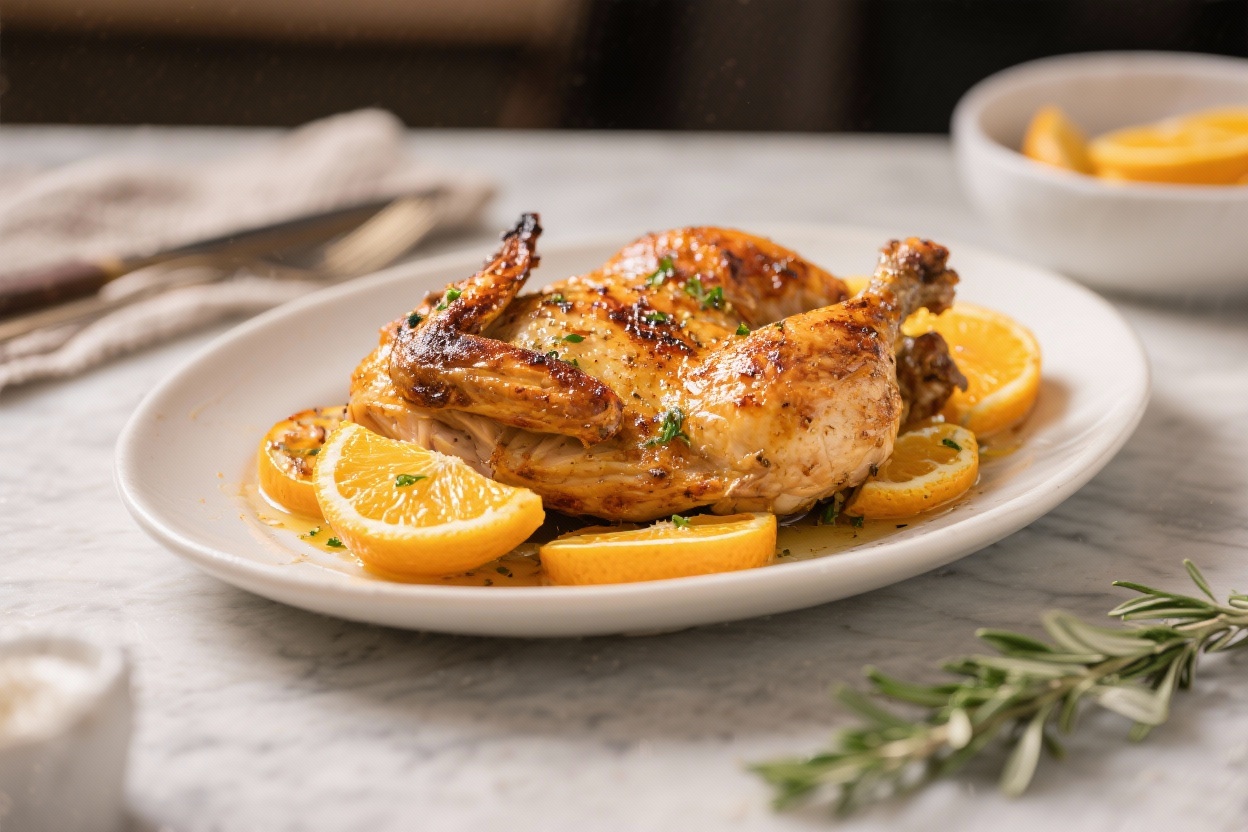
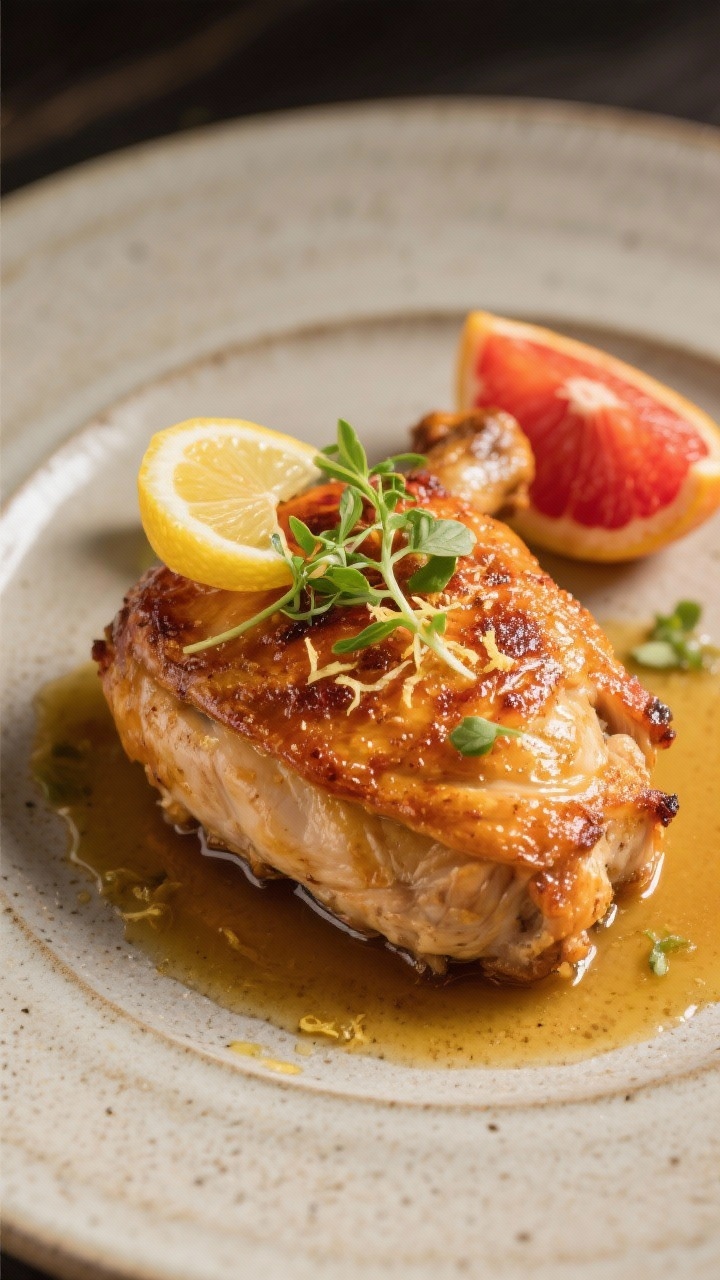
Nothing beats a roasted chicken that perfumes the whole kitchen. This oven-roasted citrus chicken is juicy on the inside, golden on the outside, and full of sunny flavor. It’s simple enough for a weeknight but special enough for guests.
The citrus adds brightness without making the dish overly sweet. With a handful of pantry staples and fresh fruit, you’ll have a meal that feels both comforting and fresh.
Ingredients
Method
- Preheat and prep: Heat the oven to 450°F (230°C). Pat the chicken dry with paper towels. Season generously with salt and pepper, including the cavity if using a whole bird. Let it sit while you prep the citrus.
- Make the flavor base: Slice one orange and the lemon into rounds. Zest the lemon and set the zest aside. Smash the garlic cloves. If using an onion, slice it into thick rings and scatter it in a roasting pan to create a base for the chicken.
- Mix the rub: In a small bowl, combine olive oil or softened butter with lemon zest, chopped rosemary and thyme, a pinch of salt, black pepper, and the honey if using. If you like a touch more acidity, squeeze in 1–2 tablespoons of orange or lemon juice.
- Season the chicken thoroughly: If using a whole chicken, gently loosen the skin over the breasts and thighs and rub some of the mixture underneath. Rub the rest all over the skin. Stuff the cavity with a few citrus slices, some garlic, and herb sprigs. For pieces, just coat them well on all sides.
- Arrange the pan: Place remaining citrus slices and smashed garlic around the chicken. Add a few sprigs of rosemary and thyme. Pour the broth or wine into the pan if using; it prevents scorching and creates flavorful steam.
- Start hot for crisp skin: Roast at 450°F for 15–20 minutes to get the skin going. This helps build color and texture.
- Lower the heat to finish: Reduce the oven to 375°F (190°C) and continue roasting until the thickest part of the thigh reaches 165°F (74°C), juices run clear, and the skin is deep golden. For a 4-pound bird, this typically takes 45–60 more minutes. For bone-in pieces, plan on 30–40 minutes total, depending on size.
- Rest before slicing: Transfer the chicken to a board and rest 10–15 minutes. This keeps the juices in the meat. Meanwhile, tilt the roasting pan and spoon off excess fat if needed.
- Make a quick pan sauce (optional): Set the pan over medium heat. Add a splash of broth or wine and scrape up the brown bits. Simmer 2–3 minutes to thicken slightly. Taste and adjust with a pinch of salt, pepper, or a squeeze of citrus.
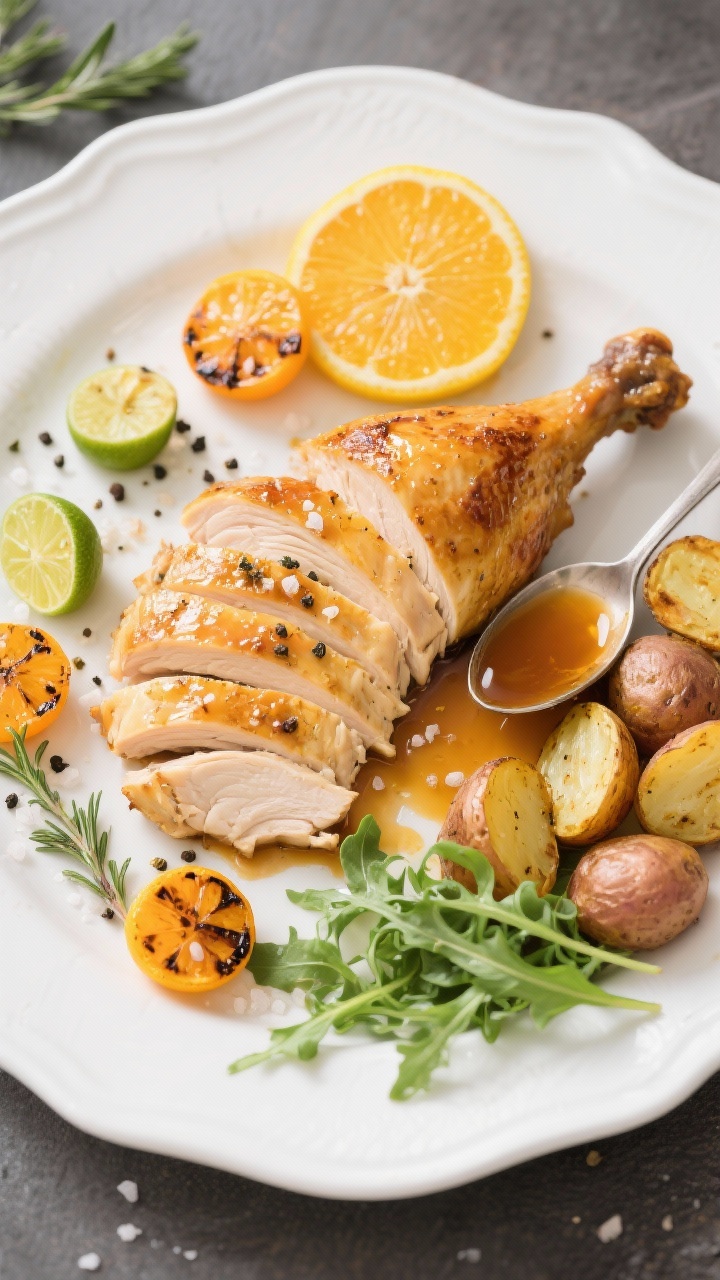
- Serve: Carve the chicken and spoon those citrusy pan juices over the meat. Serve with roasted vegetables, a green salad, or buttery rice.
Why This Recipe Works
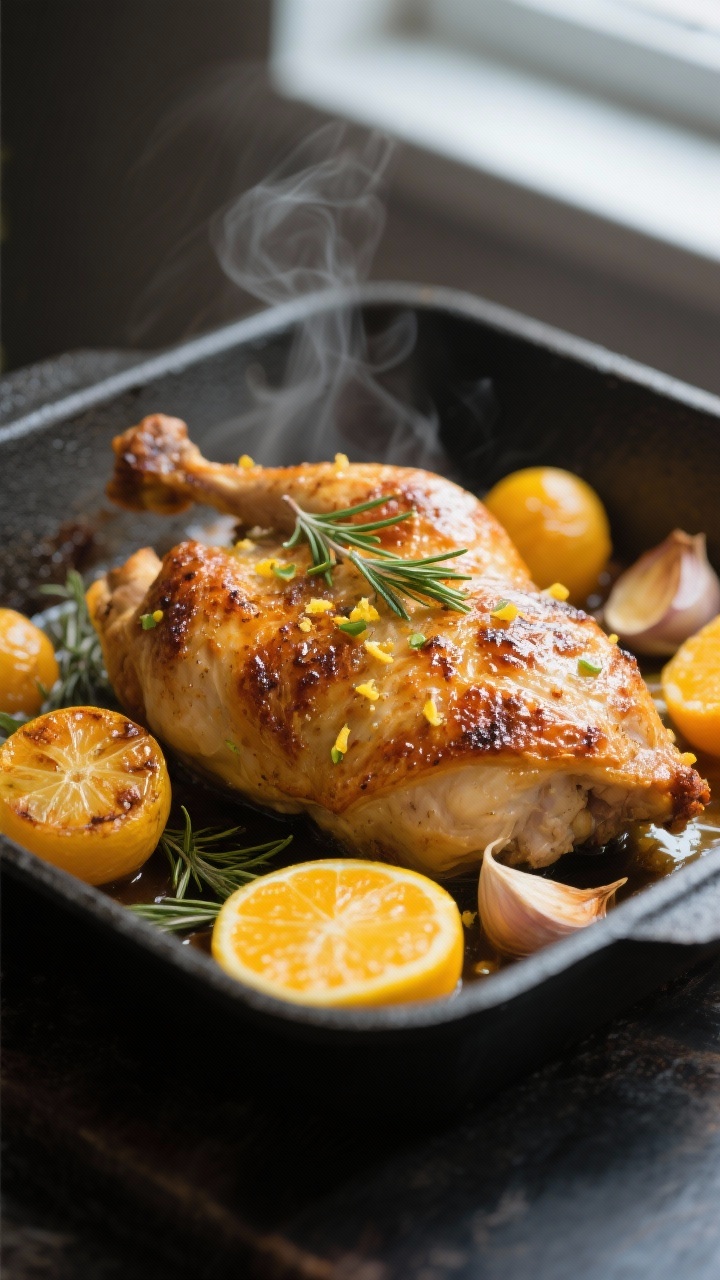
This recipe relies on a few smart steps and ingredients to deliver big flavor with minimal effort.
- Citrus + herbs: Oranges, lemons, and limes add acidity and fragrance that tenderize the meat and balance the richness.
- Drying the skin: Patting the chicken dry (and a brief rest with salt) helps the skin crisp up beautifully.
- High-then-moderate heat: A hot start jumpstarts browning; a lower finish keeps the chicken juicy.
- Compound butter or olive oil: Fat carries flavor. Rubbing it under and over the skin seasons the meat and promotes browning.
- Pan juices = instant sauce: The citrus, garlic, and drippings create a bright, savory jus to spoon over everything.
Shopping List
- 1 whole chicken (about 3.5–4.5 pounds), or 4–6 bone-in, skin-on chicken pieces
- 2 oranges (one for slices, one for juice)
- 1 lemon (slices and zest)
- 1 lime (optional, for extra brightness)
- 6–8 garlic cloves, smashed
- Fresh herbs: rosemary and thyme (or use dried if needed)
- 2–3 tablespoons olive oil or softened unsalted butter
- 1 teaspoon honey or maple syrup (optional, to balance acidity)
- Sea salt and black pepper
- 1 small onion, thickly sliced (optional, for the roasting bed)
- 1/2 cup chicken broth or dry white wine (optional, for the pan)
Instructions

- Preheat and prep: Heat the oven to 450°F (230°C).
Pat the chicken dry with paper towels. Season generously with salt and pepper, including the cavity if using a whole bird. Let it sit while you prep the citrus.
- Make the flavor base: Slice one orange and the lemon into rounds.
Zest the lemon and set the zest aside. Smash the garlic cloves. If using an onion, slice it into thick rings and scatter it in a roasting pan to create a base for the chicken.
- Mix the rub: In a small bowl, combine olive oil or softened butter with lemon zest, chopped rosemary and thyme, a pinch of salt, black pepper, and the honey if using.
If you like a touch more acidity, squeeze in 1–2 tablespoons of orange or lemon juice.
- Season the chicken thoroughly: If using a whole chicken, gently loosen the skin over the breasts and thighs and rub some of the mixture underneath. Rub the rest all over the skin. Stuff the cavity with a few citrus slices, some garlic, and herb sprigs.
For pieces, just coat them well on all sides.
- Arrange the pan: Place remaining citrus slices and smashed garlic around the chicken. Add a few sprigs of rosemary and thyme. Pour the broth or wine into the pan if using; it prevents scorching and creates flavorful steam.
- Start hot for crisp skin: Roast at 450°F for 15–20 minutes to get the skin going.
This helps build color and texture.
- Lower the heat to finish: Reduce the oven to 375°F (190°C) and continue roasting until the thickest part of the thigh reaches 165°F (74°C), juices run clear, and the skin is deep golden. For a 4-pound bird, this typically takes 45–60 more minutes. For bone-in pieces, plan on 30–40 minutes total, depending on size.
- Rest before slicing: Transfer the chicken to a board and rest 10–15 minutes.
This keeps the juices in the meat. Meanwhile, tilt the roasting pan and spoon off excess fat if needed.
- Make a quick pan sauce (optional): Set the pan over medium heat. Add a splash of broth or wine and scrape up the brown bits.
Simmer 2–3 minutes to thicken slightly. Taste and adjust with a pinch of salt, pepper, or a squeeze of citrus.
- Serve: Carve the chicken and spoon those citrusy pan juices over the meat. Serve with roasted vegetables, a green salad, or buttery rice.
Storage Instructions
- Refrigerator: Store leftover chicken in an airtight container for up to 4 days.
Keep pan juices separate if possible.
- Freezer: Shred or slice the meat and freeze in portions with some juices for up to 3 months. Thaw overnight in the fridge.
- Reheating: Warm gently at 300°F (150°C), covered with foil and a splash of broth or pan juices to prevent drying. For quick lunches, reheat in a skillet with a bit of olive oil.
- Leftover ideas: Toss into salads, grain bowls, tacos, or a lemony pasta.
The citrus flavor makes leftovers taste fresh.
Why This is Good for You
- Lean protein: Chicken provides a satisfying, high-protein base that keeps you full.
- Bright flavors, less salt: Citrus and herbs add big flavor so you can use less sodium.
- Healthy fats: Olive oil offers heart-friendly monounsaturated fats.
- Vitamin boost: Lemon and orange bring vitamin C and antioxidants that support immune health.
Pitfalls to Watch Out For
- Soggy skin: If you don’t pat the chicken dry or you overcrowd the pan, the skin won’t crisp. Give it space and start with high heat.
- Overcooking: Use an instant-read thermometer. Pull at 165°F in the thigh and rest the meat.
- Bitter flavors: Too much pith (the white part of citrus) can taste bitter if burned.
Keep slices moist in the pan juices and avoid broiling them to death.
- Watery pan: Excess liquid can steam instead of roast. Use only a modest splash of broth or wine and avoid covering the pan.
- Underseasoning: Salt liberally, especially on thicker cuts and under the skin. Citrus enhances flavor but doesn’t replace salt.
Recipe Variations
- Herb switch-up: Try oregano and parsley for a Mediterranean vibe, or cilantro and a pinch of cumin for a brighter, slightly earthy twist.
- Spice it up: Add red pepper flakes, smoked paprika, or a touch of harissa to the rub for warmth and depth.
- Honey-mustard glaze: Whisk 1 tablespoon Dijon with 1 tablespoon honey and a splash of orange juice; brush on during the last 10 minutes.
- Citrus trio: Use orange, lemon, and lime for a complex citrus note.
Blood oranges add gorgeous color.
- Sheet-pan dinner: Scatter baby potatoes, carrots, or fennel around the chicken. Toss with olive oil, salt, and pepper so everything roasts together.
- Boneless, skinless option: Use thighs or breasts, roast at 400°F (205°C) for 18–30 minutes depending on thickness. Baste once with pan juices.
FAQ
Can I marinate the chicken ahead?
Yes.
Combine the citrus juice, herbs, garlic, and oil, then marinate the chicken for 2–12 hours in the fridge. Pat dry before roasting to ensure crisp skin, and rub with fresh oil or butter.
What if I don’t have fresh herbs?
Use 1 teaspoon dried rosemary and 1 teaspoon dried thyme. Rub them between your fingers to release aroma.
Dried oregano also works well here.
How do I know when the chicken is done?
Use an instant-read thermometer. The thickest part of the thigh should reach 165°F (74°C). The juices should run clear, and the legs should wiggle easily.
Can I make this with chicken breasts only?
Yes, but watch the time.
Bone-in breasts stay juicier; boneless cook faster. Roast at 400°F (205°C) and start checking at 18 minutes for boneless, 30 minutes for bone-in.
Is the pan sauce necessary?
No, but it’s fast and delicious. A quick deglaze with broth or wine, plus a squeeze of lemon, makes a bright, savory sauce that ties everything together.
What sides go well with this?
Try roasted potatoes, sautéed green beans, a crisp arugula salad, or couscous with chopped herbs.
The citrus notes pair well with bitter greens and buttery starches.
Can I use only lemons?
Absolutely. Lemons alone give a clean, classic flavor. If you use only lemons, add a teaspoon of honey to balance the acidity.
In Conclusion
Oven-roasted citrus chicken is the kind of recipe that feels effortless but tastes polished.
The combination of golden skin, tender meat, and bright pan juices makes it a repeat favorite. With simple ingredients and a few smart techniques, you’ll get reliable, crowd-pleasing results every time. Keep it classic or riff with spices and sides—either way, you’re set for a satisfying, sunny meal.
Printable Recipe Card
Want just the essential recipe details without scrolling through the article? Get our printable recipe card with just the ingredients and instructions.